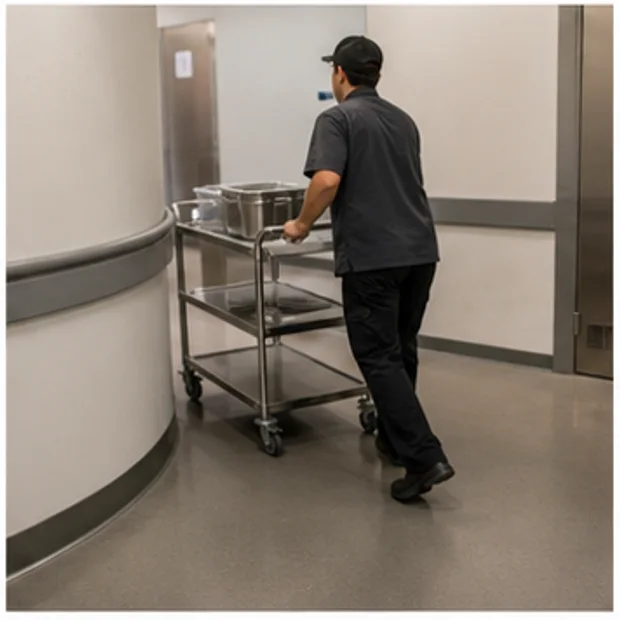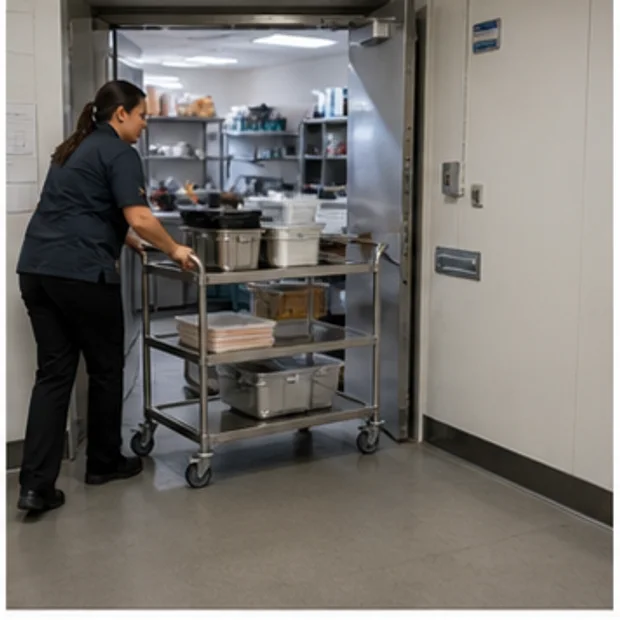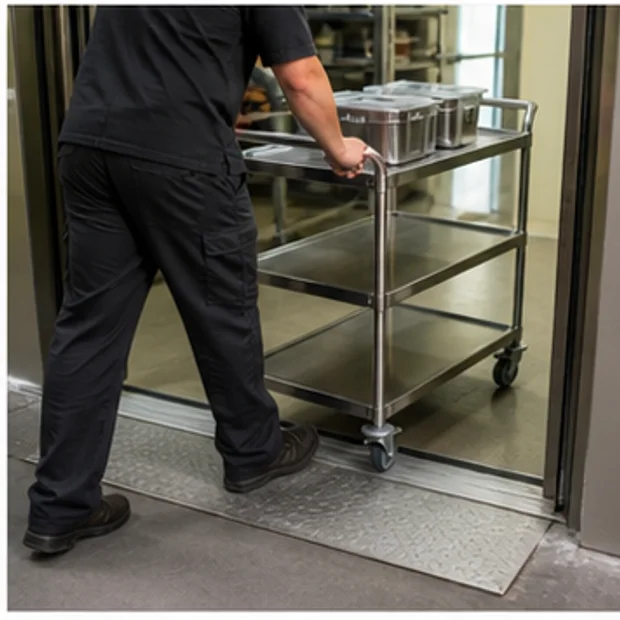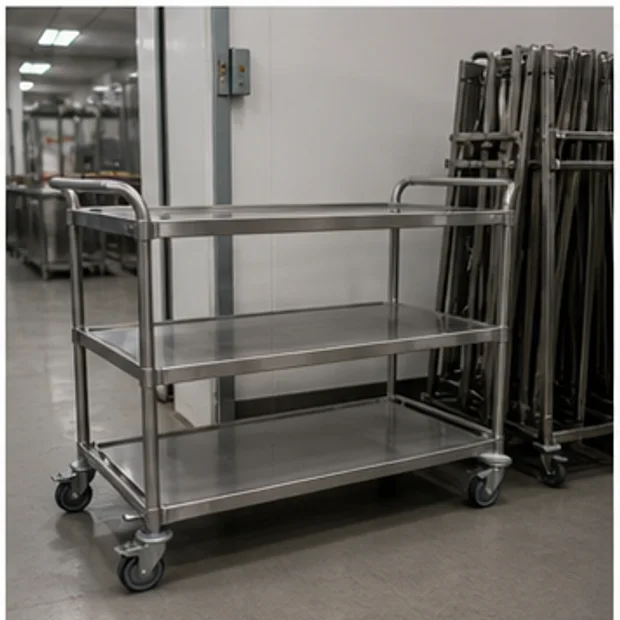
Procurement Guide

Utility Cart

Define the origin-to-destination transport workflow, carried items, loading, unloading, operator handling, route, cleaning, and parking first; then bound the support, fabricated cart, mobility, site, and drawing evidence required.

First procurement question

What must be carried, how will staff load, move, turn, unload, clean, and park the cart, and what fabricated support and mobility responsibility follows?

Utility Cart in an active commercial workflow

Define the Utility Cart fabrication requirement

Start with operational use and surrounding workflow. The fabricated envelope, support or interface duty, construction, sanitation, placement, and drawing evidence follow from that real application.

Utility Cart define transport workflow and envelope context
Transport workflowDefine transport workflow and envelope

Begin with carried items, origin, destination, loading, unloading, and operator movement rather than shelf count or dimensions.

Carried items
Describe items and handling context.
Origin
Identify where transport begins.
Destination
Identify where transport ends.
Loading sequence
Map how items enter.
Unloading sequence
Map how items leave.
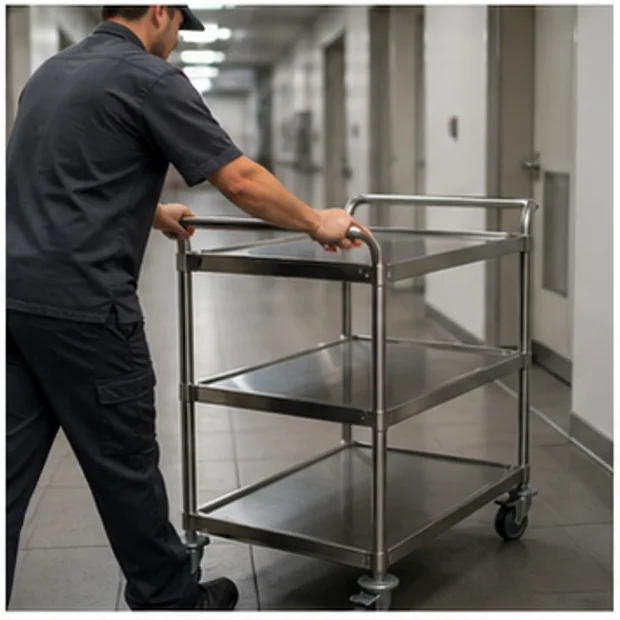
Operator handling
Describe push, pull, and reach qualitatively.
Route
Record corridors and turns.
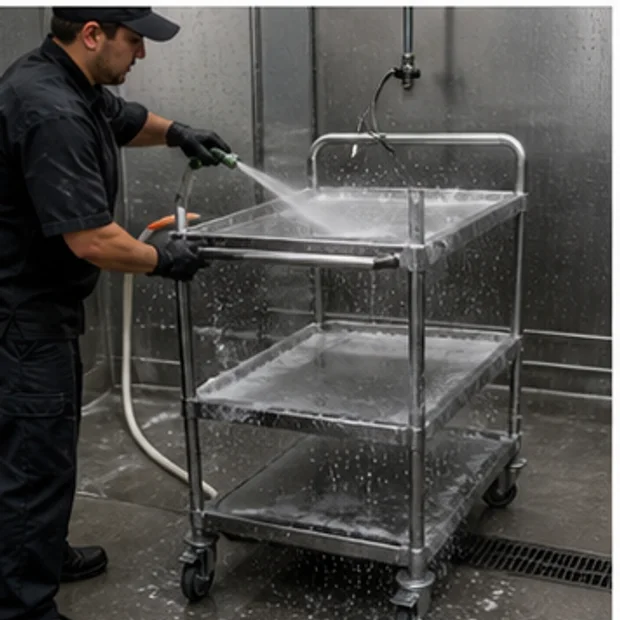
Cleaning workflow
Map cart and storage-area cleaning.
Utility Cart map support, cart, and mobility responsibilities context
Cart responsibilityMap support, cart, and mobility responsibilities

Translate transport into support, storage, access, containment, construction, maneuvering, finish, and sanitation evidence.

Support duty
Describe carried-item responsibility qualitatively.
Storage architecture
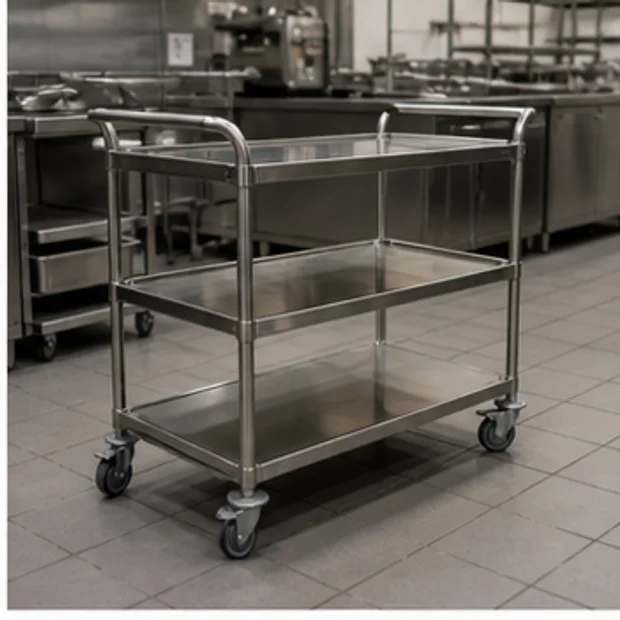
Record open, shelf, or enclosed characteristics.
Loading access
Preserve safe item handling.
Containment
Describe edge or enclosure responsibility.
Mobility
Identify maneuvering and control needs.
Operator interface
Describe handle and reach evidence.
Construction evidence
Review frame and joint responsibility.
Material and sanitation
Request finish and cleanability evidence.
Utility Cart bound route, placement, and drawing context
Route and drawingBound route, placement, and drawing

Confirm floors, thresholds, turns, parking, cleaning, delivery, site access, and drawing evidence after transport duty is bounded.

Route context
Describe travel path.
Floor surfaces
Record relevant conditions qualitatively.
Thresholds
Identify transitions.
Turning context
Describe maneuvering constraints.
Parking
Identify storage position.
Cleaning location
Map wash and dry workflow.
Delivery path
Record route into the project.
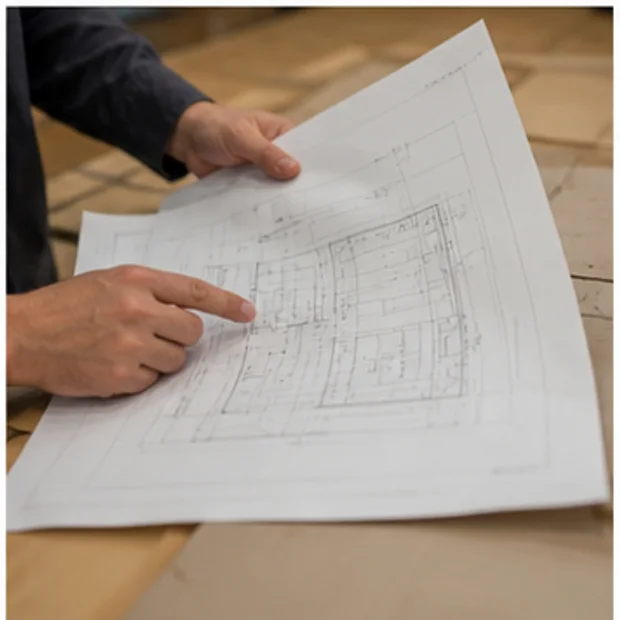
Drawing confirmation
List envelope and interface evidence a candidate must prove.
Transport workflow → Cart responsibility → Route and drawing

Output: a bounded Utility Cart fabrication requirement

Carried items, loading, unloading, transport route, operator handling, support and storage architecture, mobility, sanitation, parking, and delivery constraints now provide a Product Model and drawing-review basis.

Determine the practical Utility Cart configuration path

Translate workflow, support or interface responsibility, fabrication, sanitation, placement, and drawing needs into candidate-level review questions.

Utility Cart qualitative fabrication responsibility map
Qualitative fabrication review map; no dimensions, grades, gauges, capacities, or drawing values implied.

Workflow and site requirements create fabrication responsibility

  • Transport workflow
  • Support and storage
  • Fabrication and mobility
  • Route and drawing
  1. Transport workflow

    What must move, from where to where, and how is it loaded and unloaded?

    Bound the transport, loading, unloading, and operator relationship.

  2. Support and storage duty

    What qualitative carried-item and containment responsibility follows?

    Review cart support, storage, access, and containment characteristics.

  3. Fabrication, mobility, and sanitation

    What construction, maneuvering, finish, and cleaning evidence is required?

    Review frame, mobility, operator interface, and cleanability evidence.

  4. Route and drawing

    Where must the cart travel, turn, park, clean, and arrive?

    Review route, floor, placement, delivery, and candidate drawing evidence.

This path bounds fabrication-review responsibilities. Exact dimensions, materials, construction, interfaces, and site evidence remain candidate, model, and drawing confirmations.

Explore representative Utility Cart configurations

Compare four overlapping design-stage configurations through one consistent workflow, fabrication, placement, and drawing-review inventory.

  • Transport / application context
  • Loading / unloading responsibility
  • Support / storage architecture
  • Fabrication / mobility / sanitation responsibility
  • Route / parking / site / drawing basis
  1. Design-stage open-service transport configuration

    Open-service transport configuration

    Open access supports direct loading, unloading, and visual item control.

    Transport / application context
    Direct transport workflow
    Loading / unloading responsibility
    Open loading and unloading
    Support / storage architecture
    Open storage characteristic
    Fabrication / mobility / sanitation responsibility
    Frame, mobility, finish, and sanitation reviewed
    Route / parking / site / drawing basis
    Route, parking, cleaning, and drawing confirmed
    Request Model Review
  2. Design-stage contained-item transport configuration

    Contained-item transport configuration

    Containment characteristics coordinate item security and operator access.

    Transport / application context
    Contained transport workflow
    Loading / unloading responsibility
    Loading follows item protection need
    Support / storage architecture
    Edge or enclosure characteristics
    Fabrication / mobility / sanitation responsibility
    Construction, mobility, finish, and cleaning reviewed
    Route / parking / site / drawing basis
    Route, access, parking, and drawing confirmed
    Request Model Review
  3. Design-stage high-turnover workflow configuration

    High-turnover workflow configuration

    Repeated movement coordinates loading, destination access, return, and cleaning.

    Transport / application context
    Repeated transport workflow
    Loading / unloading responsibility
    Loading and unloading follow frequent cycles
    Support / storage architecture
    Accessible support and storage characteristics
    Fabrication / mobility / sanitation responsibility
    Mobility, operator interface, and sanitation reviewed
    Route / parking / site / drawing basis
    Turns, thresholds, parking, and drawing confirmed
    Request Model Review
  4. Design-stage project-specific utility configuration

    Project-specific utility configuration

    A project direction coordinates carried items, route, containment, and site constraints.

    Transport / application context
    Project-specific transport context
    Loading / unloading responsibility
    Access follows bounded item workflow
    Support / storage architecture
    Candidate support and storage characteristics
    Fabrication / mobility / sanitation responsibility
    Fabrication, mobility, finish, and cleaning reviewed
    Route / parking / site / drawing basis
    Delivery, route, placement, and drawing confirmed
    Request Model Review

These are overlapping configurations, not Two-shelf Utility Cart, Three-shelf Utility Cart, or Enclosed Utility Cart Product Subcategories, canonical Product Models, or exclusive taxonomy.

Establish the candidate and drawing review basis

Test whether a future candidate or drawing satisfies the bounded workflow, fabrication, sanitation, placement, and site requirement rather than repeating the initial brief.

Carried items
Verify item context.
Origin and destination
Confirm transport workflow.
Loading and unloading
Review access evidence.
Operator handling
Test push, pull, and reach.
Support architecture
Review qualitative responsibility.
Containment
Confirm applicable characteristics.
Construction
Review frame and joints.
Mobility
Confirm maneuvering evidence.
Sanitation
Verify cleaning access.
Site drawing
Review route, parking, and envelope.
Utility Cart site and drawing confirmation context without visible measurements
Candidate review zones
  • Transport workflow
  • Loading and support
  • Cart fabrication
  • Mobility and sanitation
  • Route and drawing

Output: a bounded Utility Cart candidate and drawing review basis

CATERTOP can test future Product Models or supplier drawings against the workflow, fabricated envelope, construction, sanitation, placement, access, and project requirement without automatic selection.

Assemble the supplier and drawing confirmation dossier

Align buyer-supplied workflow and site facts with the candidate-specific fabrication, drawing, packing, and commercial information CATERTOP reviews or confirms.

  • Utility Cart workflow / application confirmation context

    Workflow / application

    Carried items, origin and destination, loading, unloading, operator handling, route, turnover, and cleaning workflow.

  • Utility Cart fabrication / construction confirmation context

    Fabrication / construction

    Support and storage architecture, access, containment, cart construction, mobility, operator interface, finish, and sanitation.

  • Utility Cart site / drawing review confirmation context

    Site / drawing review

    Route, floors, thresholds, turns, parking, cleaning location, delivery access, placement, and candidate drawing requirements.

  • Utility Cart packing / destination confirmation context

    Packing / destination

    Protective packing and destination preparation carried into commercial review.

  • Workflow, application, and fabricated-envelope confirmation

    Buyer provides

    Carried items, origin and destination, loading, unloading, operator handling, route, turnover, and cleaning workflow.

    CATERTOP reviews / confirms

    Candidate applicability, bounded working relationship, and evidence required for model or drawing review.

  • Support, interface, and product-specific fabrication confirmation

    Buyer provides

    Support and storage architecture, access, containment, cart construction, mobility, operator interface, finish, and sanitation.

    CATERTOP reviews / confirms

    Candidate structure, applicable fabrication arrangement, and interface evidence.

  • Material, finish, construction, and sanitation confirmation

    Buyer provides

    Food-contact or exposure context, wet or dry workflow, cleaning process, and environmental conditions.

    CATERTOP reviews / confirms

    Candidate material, finish, joint, construction, edge, and cleanability evidence.

  • Dimensions, placement, installation, site, and drawing confirmation

    Buyer provides

    Route, floors, thresholds, turns, parking, cleaning location, delivery access, placement, and candidate drawing requirements.

    CATERTOP reviews / confirms

    Candidate, model, or drawing dimensions, interfaces, access, placement, and installation evidence.

  • Packing, destination, and commercial documentation

    Buyer provides

    Quantity, destination, timing, branding, packing, inspection, documentation, and commercial requirements.

    CATERTOP reviews / confirms

    Applicable packing basis, destination requirements, documentation, and commercial confirmation scope.

The dossier makes drawing confirmation visible without implying that a final drawing, specification, certificate, inspection record, or document is already approved or available.

Prepare the Utility Cart requirement

Send the five requirement groups CATERTOP needs to review applicable Product Models or supplier drawings and prepare the commercial response.

Include these details in your inquiry

5 brief points
  1. Transport workflow and carried itemsItems, origin, destination, loading, unloading, operator handling, route, and cleaning.
  2. Route, floor, and parking contextCorridors, turns, thresholds, floor conditions, destination access, parking, and cleaning location.
  3. Support, storage, and cart responsibilitiesQualitative support duty, access, containment, storage characteristics, construction, mobility, finish, and sanitation.
  4. Delivery, site, and drawing requirementsDelivery path, placement constraints, route evidence, and candidate drawing confirmation.
  5. Order and project contextQuantity, destination, timing, packing, branding, documentation, inspection, and commercial requirements.

Send the written brief through the Products inquiry.