Procurement Guide

Beer Dispenser

Define the prepared beverage supply, required serving condition, service turnover, product connection, replenishment, and dispense rhythm first; then review delivery, sanitation, utilities, and site responsibilities.

First procurement question

What prepared beer supply must be served, through what connection, replenishment, and dispense rhythm, and what service-delivery responsibility follows?

Beer Dispenser in a commercial service workflow

Define the Beer Dispenser service-system requirement

Start with the service-ready product or service input. Duration, turnover, replenishment, access or dispensing, condition maintenance, cleaning, utilities, and site responsibilities follow from the real service workflow.

Beer Dispenser define beverage supply and service condition context
Prepared beverage supplyDefine beverage supply and service condition

Start with prepared beer supply and required service condition rather than beverage production.

Beverage supply
Identify packaged prepared product.
Incoming condition
Describe supply state.
Serving condition
Define qualitative service readiness.
Supply format
Record connection context without fixed sizes.
Service vessel
Describe glass or receiving format.
Service window
Map availability period.
Turnover
Describe product movement.
Peak service
Identify demanding dispense periods.
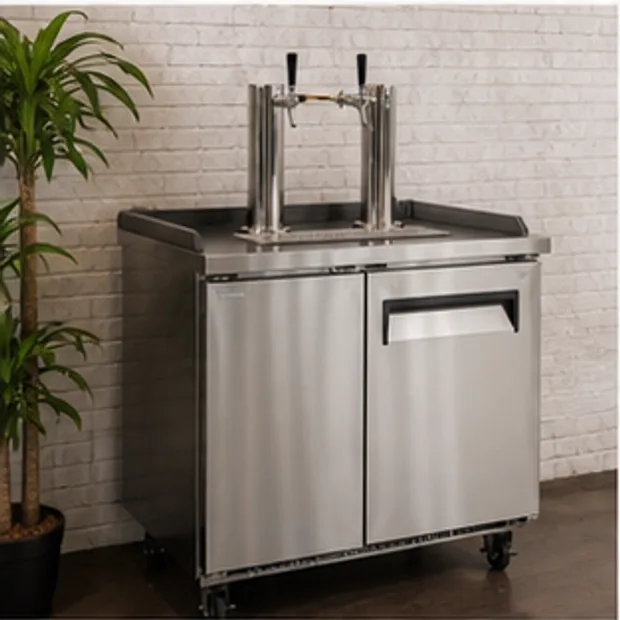
Beer Dispenser map connection, replenishment, and dispense context
Connection and dispenseMap connection, replenishment, and dispense

Translate service rhythm into product connection, changeover, dispense, access, and sanitation responsibilities.

Supply connection
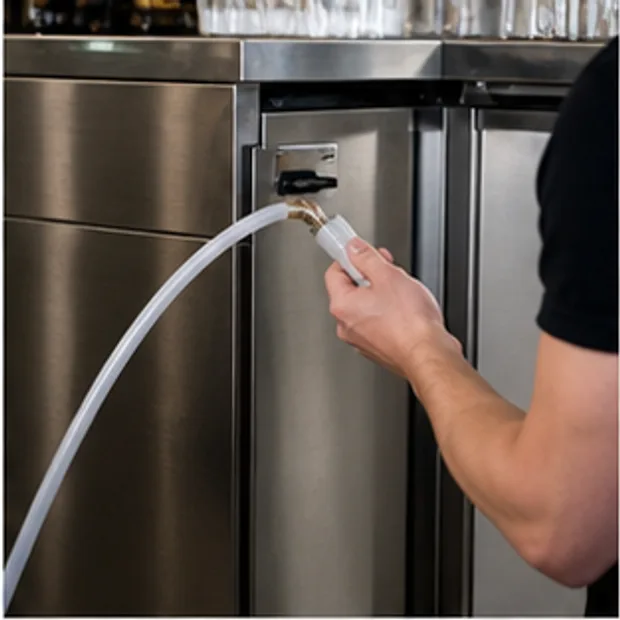
Describe candidate interface for confirmation.
Replenishment
Map product replacement.
Changeover sequence
Describe transition between supplies.
Dispense rhythm
Record routine serving.
Peak dispensing
Identify overlapping service.
Operator access
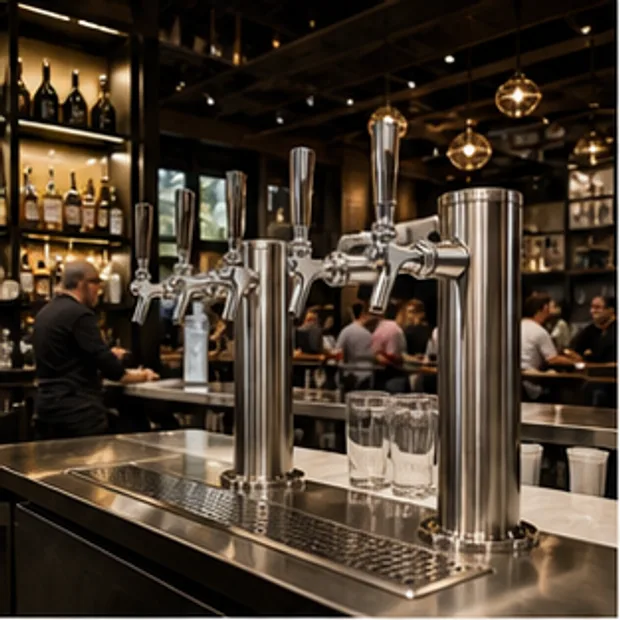
Describe connection and tap workflow.
Customer access
Record it only where applicable.
Spill and drip management
Map service-area residue.
Beer Dispenser bound delivery-system duty and site context
Delivery-system dutyBound delivery-system duty and site

Constrain turnover, repeated dispensing, service delivery, controls, sanitation, utilities, and access.

Routine duty
Describe normal dispense service.
Peak duty
Identify demanding turnover.
Delivery responsibility
State qualitative product-delivery role.
Connection responsibility
Identify candidate evidence.
Control responsibility
Record operating confirmation needs.
Sanitation
Map beverage-path cleaning.
Destination utilities
Record available services.
Placement and service
Confirm bar position and maintenance access.
Prepared beverage supply → Connection and dispense → Delivery-system duty

Output: a bounded Beer Dispenser service-system requirement

Prepared beverage supply, serving condition, turnover, product connection, dispense rhythm, sanitation, utilities, and placement now form the CATERTOP model-review basis.

Determine the practical Beer Dispenser configuration path

Translate service condition, turnover, replenishment, access or dispensing, cleaning, utilities, and placement into candidate-level questions.

Beer Dispenser qualitative service-flow worksheet
Qualitative service-flow map; no temperature, capacity, tray-count, or recovery values implied.

Service condition and workflow create holding-system responsibility

  • Beverage supply
  • Turnover
  • Connection and dispense
  • Sanitation and site
  1. Beverage supply and condition

    What prepared beverage and serving condition must the system support?

    Review supply compatibility and service-delivery responsibility.

  2. Turnover and replenishment

    How does routine and peak service shape product replacement?

    Review repeated-service duty and changeover evidence.

  3. Connection and dispense

    How will product connect, flow into service, and reach the receiving vessel?

    Review connection, operator access, dispense, drip, and service workflow.

  4. Sanitation, utilities, and site

    How will the beverage path be cleaned and the station serviced?

    Review cleaning access, destination interfaces, placement, and maintenance.

This path defines service-system review responsibilities. Exact arrangement, controls, dimensions, utilities, and operating evidence remain Product Model confirmations.

Explore representative Beer Dispenser configurations

Compare four overlapping beer-service configurations through shared supply, dispense, and site fields.

  • Installation / beer-service context
  • Prepared-beverage supply / connection arrangement
  • Replenishment / dispense architecture
  • Service-delivery / turnover responsibility
  • Sanitation / utilities / placement / site basis
  1. Design-stage staffed bar dispense configuration

    Staffed bar dispense configuration

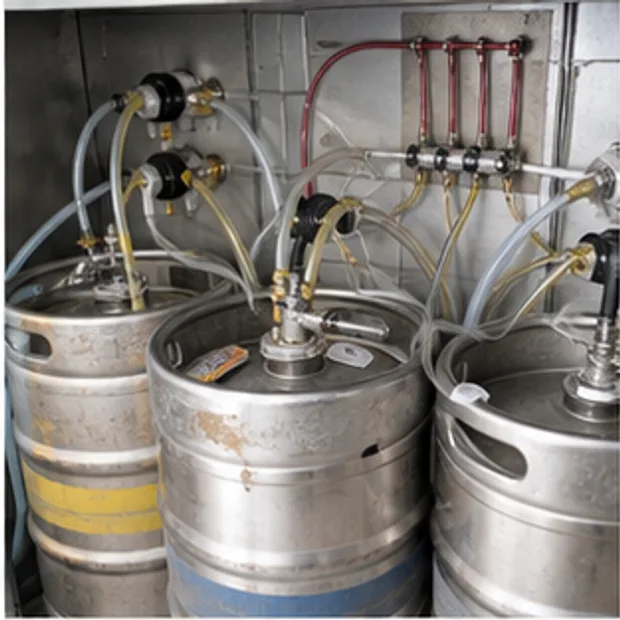
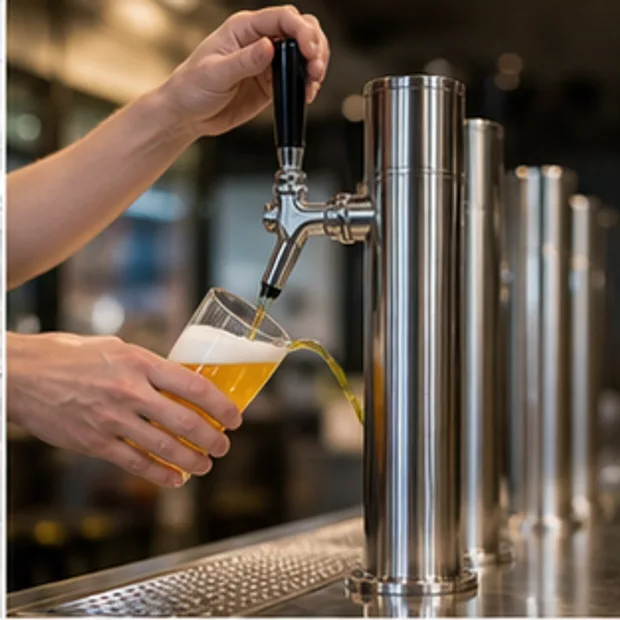
    A direct operator workflow connects prepared supply to glass service.

    Installation / beer-service context
    Staffed bar placement
    Prepared-beverage supply / connection arrangement
    Prepared supply connected for service
    Replenishment / dispense architecture
    Operator replacement and direct dispense
    Service-delivery / turnover responsibility
    Duty follows turnover and service window
    Sanitation / utilities / placement / site basis
    Beverage-path sanitation, utilities, and site confirmed
    Request Model Review
  2. Design-stage remote-supply service configuration

    Remote-supply service configuration

    Supply and dispense positions are coordinated across the installed bar context.

    Installation / beer-service context
    Installed bar-service context
    Prepared-beverage supply / connection arrangement
    Supply relationship extends to service point
    Replenishment / dispense architecture
    Replenishment and dispense occur at distinct positions
    Service-delivery / turnover responsibility
    Delivery evidence follows service rhythm
    Sanitation / utilities / placement / site basis
    Connection sanitation, utilities, placement, and access reviewed
    Request Model Review
  3. Design-stage mobile event-service configuration

    Mobile event-service configuration

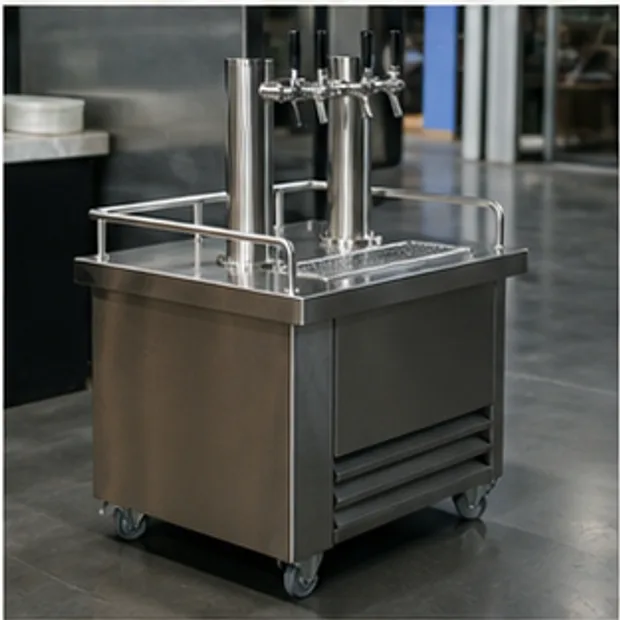
    A relocatable direction supports temporary staffed service where applicable.

    Installation / beer-service context
    Movable event-service context
    Prepared-beverage supply / connection arrangement
    Prepared supply organized for temporary connection
    Replenishment / dispense architecture
    Changeover and dispense coordinated around setup
    Service-delivery / turnover responsibility
    Duty follows event turnover
    Sanitation / utilities / placement / site basis
    Mobility, sanitation, utilities, setup, and service confirmed
    Request Model Review
  4. Design-stage multi-point bar-service configuration

    Multi-point bar-service configuration

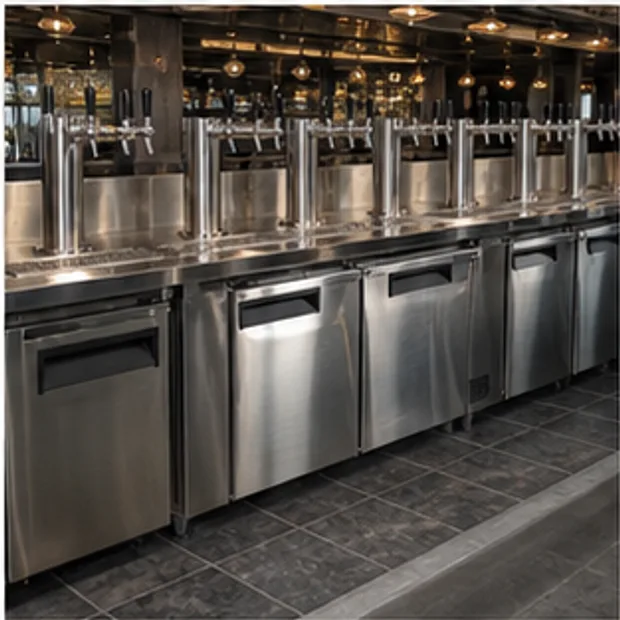
    Several dispense moments coordinate around shared service demand.

    Installation / beer-service context
    Distributed staffed bar context
    Prepared-beverage supply / connection arrangement
    Prepared supply relationship supports several service points
    Replenishment / dispense architecture
    Replenishment and dispense coordinated across operators
    Service-delivery / turnover responsibility
    Duty follows overlapping demand
    Sanitation / utilities / placement / site basis
    Connection access, sanitation, utilities, and maintenance reviewed
    Request Model Review

These are representative composite configurations, not Product Subcategories, canonical Product Models, or exclusive taxonomy. Characteristics may overlap across future candidates.

Establish the pre-shortlist service-system review basis

Verify prepared-beverage supply, serving condition, connection compatibility, turnover, replenishment, dispense, delivery evidence, sanitation, utilities, and placement.

Prepared beverage supply
Confirm service input.
Serving condition
Verify required readiness.
Supply compatibility
Review connection context.
Service window and turnover
Test duty rhythm.
Replenishment and changeover
Verify product replacement.
Dispense workflow
Review operator or customer interaction.
Delivery evidence
Assess candidate responsibility.
Sanitation and site
Confirm cleaning, utilities, placement, and service.
Beer Dispenser service workflow used for qualitative candidate review
Candidate review zones
  • Supply interface
  • Connection zone
  • Replenishment
  • Dispense service
  • Sanitation and site

Output: a bounded Beer Dispenser candidate-review basis

CATERTOP can test future Product Models against the service condition, turnover, replenishment, access or dispense workflow, operating responsibility, cleaning, utilities, and site requirement without automatic selection.

Assemble the supplier confirmation dossier

Align buyer-supplied service, workflow, and site facts with the candidate-specific configuration and commercial information CATERTOP reviews or confirms.

  • Beer Dispenser service input / condition confirmation context

    Service input / condition

    Prepared beer supply, incoming condition, required serving condition, service window, turnover, vessel format, and duty.

  • Beer Dispenser replenishment / service workflow confirmation context

    Replenishment / service workflow

    Supply connection, replenishment, changeover, dispense, operator or customer access, spill management, and delivery configuration.

  • Beer Dispenser site / service interface confirmation context

    Site / service interface

    Beverage-path sanitation, destination interfaces, bar placement, surrounding workflow, and service access.

  • Beer Dispenser packing / destination confirmation context

    Packing / destination

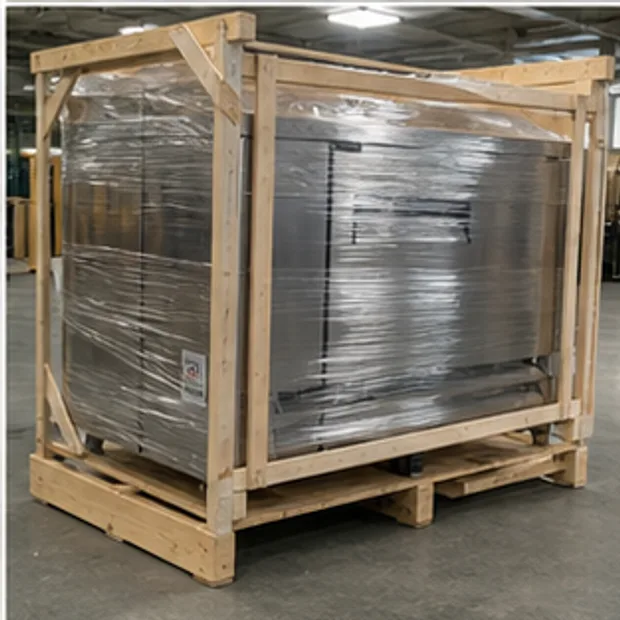
    Protective packing and destination preparation carried into commercial review.

  • Service input, target condition, duration, and duty confirmation

    Buyer provides

    Prepared beer supply, incoming condition, required serving condition, service window, turnover, vessel format, and duty.

    CATERTOP reviews / confirms

    Applicable Product Model basis for the stated service condition and bounded duty.

  • Replenishment, access, and service-configuration confirmation

    Buyer provides

    Supply connection, replenishment, changeover, dispense, operator or customer access, spill management, and delivery configuration.

    CATERTOP reviews / confirms

    Applicable loading or connection, replenishment, access or dispense, and service-system configuration.

  • Controls, interface, cleaning, and safety-related confirmation

    Buyer provides

    Operating sequence, operator or customer interface, cleaning, reset, and safety-related context.

    CATERTOP reviews / confirms

    Candidate controls, interface, cleaning information, and applicable safety-related documentation.

  • Dimensions, utilities, mobility, placement, and service confirmation

    Buyer provides

    Beverage-path sanitation, destination interfaces, bar placement, surrounding workflow, and service access.

    CATERTOP reviews / confirms

    Candidate dimensions, destination services, water or drainage where relevant, mobility, placement, and service access.

  • Packing, destination, and commercial documentation

    Buyer provides

    Quantity, destination, timing, packing, branding, inspection, documentation, and commercial requirements.

    CATERTOP reviews / confirms

    Packing preparation and destination or order documentation applicable to the project.

The dossier records confirmation responsibilities for the reviewed candidate. It does not imply that every certificate, drawing, test record, or document is already available.

Prepare the Beer Dispenser requirement

Send the five requirement groups CATERTOP needs to review applicable Product Models and prepare the commercial response.

Include these details in your inquiry

5 brief points
  1. Prepared beverage supply and serving conditionBeverage supply, incoming state, required readiness, service vessel, service window, and turnover.
  2. Product connection and dispense requirementSupply format, connection context, replenishment, changeover, dispense, and access workflow.
  3. Service volume and rhythmRoutine and peak demand, repeated dispensing, replacement activity, and qualitative delivery responsibility.
  4. Sanitation, utilities, and siteBeverage-path cleaning, spill management, destination interfaces, placement, and maintenance access.
  5. Order and project contextQuantity, destination, timing, packing, branding, documentation, inspection, and commercial requirements.

Send the written brief through the Products inquiry.