Procurement Guide

Holding Cabinet

Define the prepared product, required service-ready condition, holding window, turnover, and replenishment workflow first; then bound the holding responsibility, access, cleaning, mobility, utility, and site configuration for model review.

First procurement question

What prepared product must remain service-ready, for how long, and through what loading, replenishment, rotation, and withdrawal rhythm?

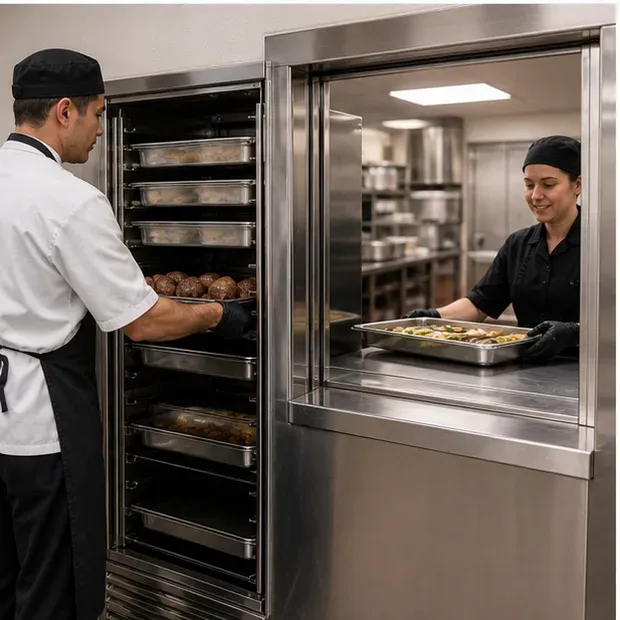
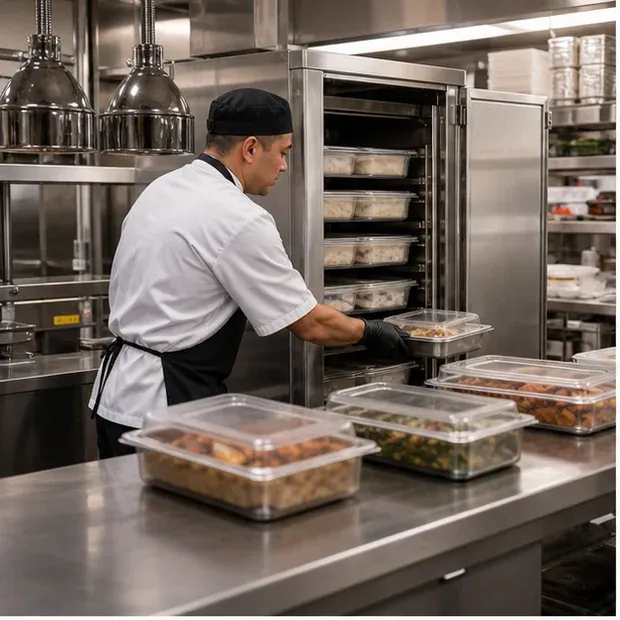
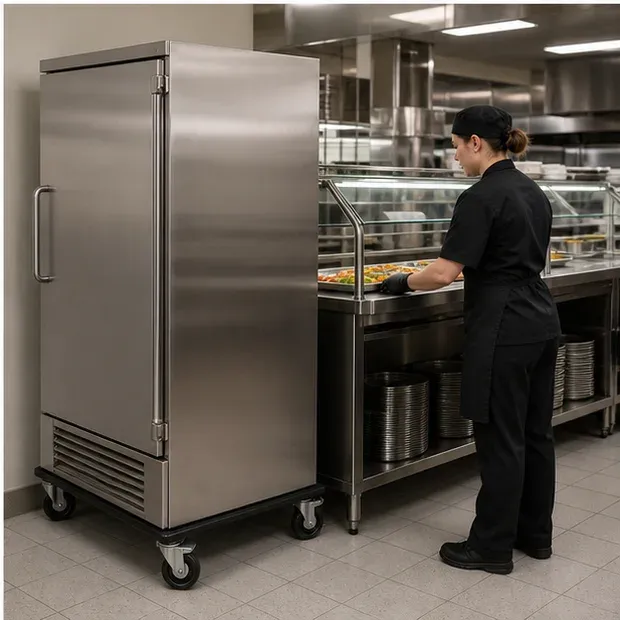
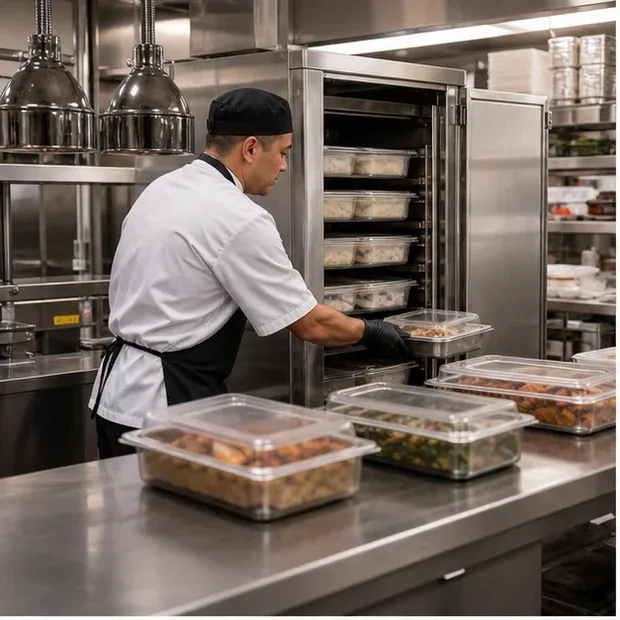
Operator staging prepared food pans beside a stainless steel commercial holding cabinet before service

Define service condition, workflow, and holding duty

Start with already-prepared food and the condition service must receive. Duration, turnover, loading, rotation, replenishment, withdrawal, and site responsibilities determine the holding-system review.

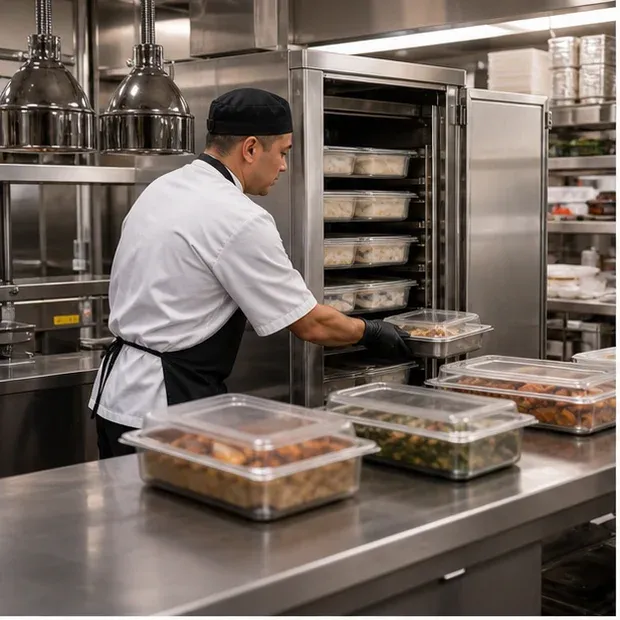
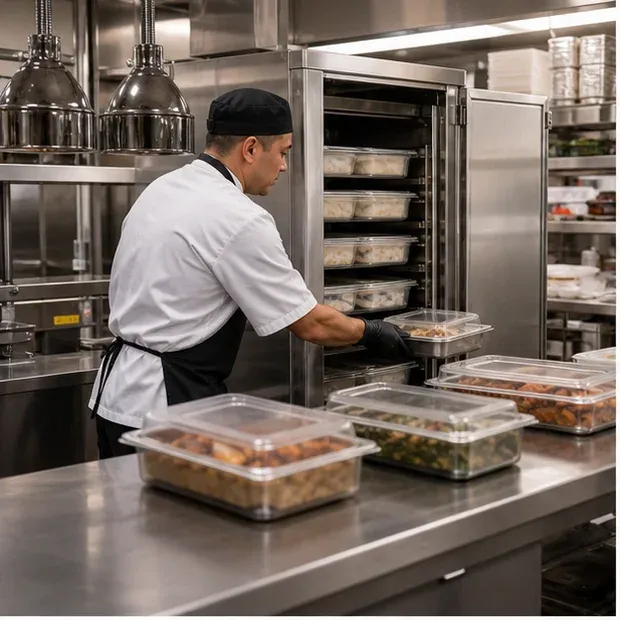
Prepared covered food pans arriving from production for commercial service staging
Service-ready productDefine product and service-ready condition

Describe the prepared product, acceptable service state, container format, holding window, and turnover before discussing cabinet configuration.

Prepared product
Identify the already-prepared food entering the holding workflow.
Incoming condition
Describe its state when transferred from production.
Service-ready condition
State the condition that must remain acceptable through service.
Condition sensitivity
Note drying or other qualitative condition changes where relevant.
Pan, tray, or container
Record the actual handling format without implying a fixed count.
Batch-arrival pattern
Describe how prepared batches reach the staging point.
Holding window
Describe the expected staging duration qualitatively.
Product turnover
Explain inventory movement through routine service.
Routine rhythm
Describe ordinary production-to-service demand.
Peak rhythm
Identify demanding overlap or rapid turnover periods.
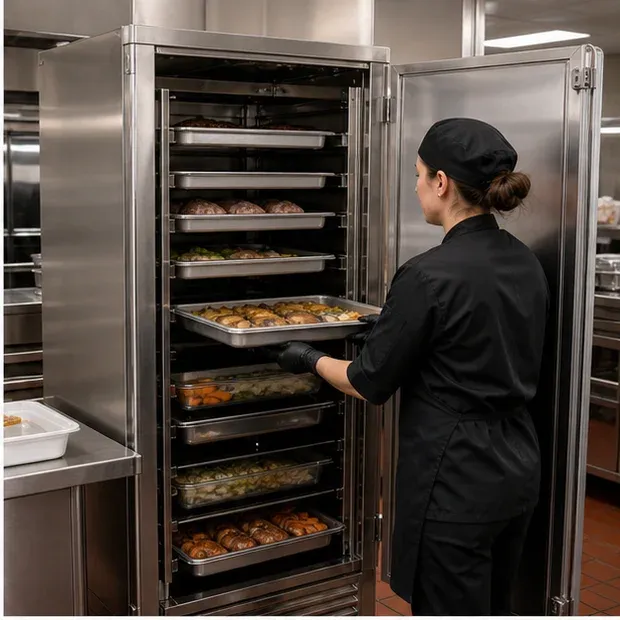
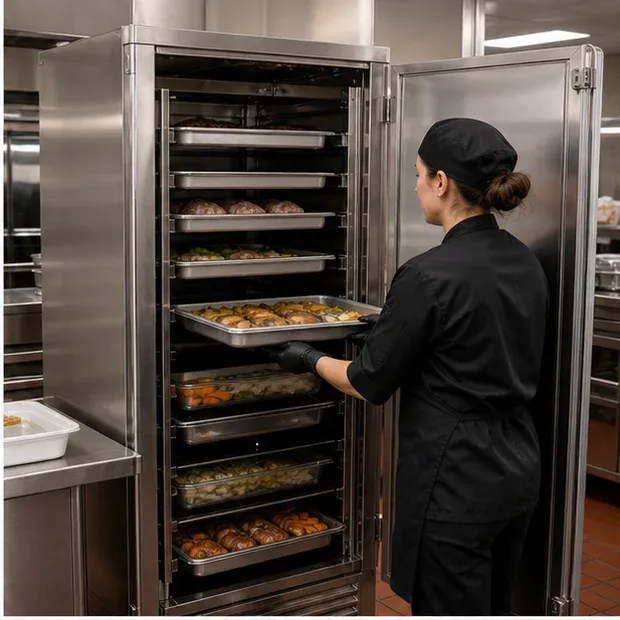
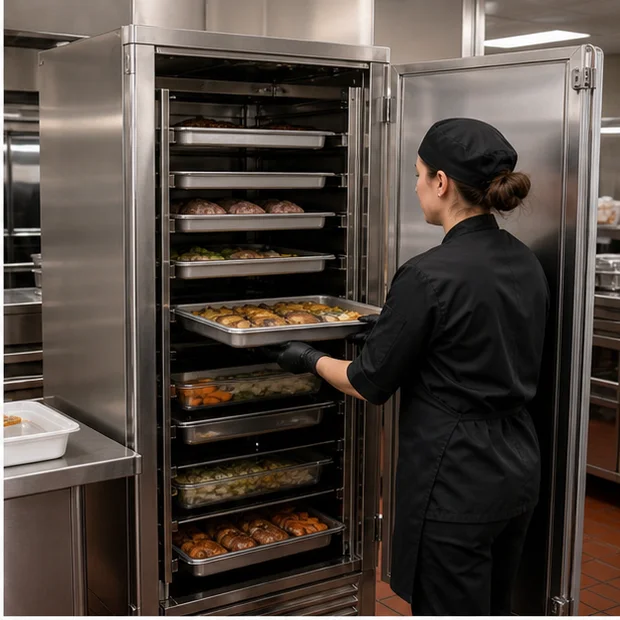
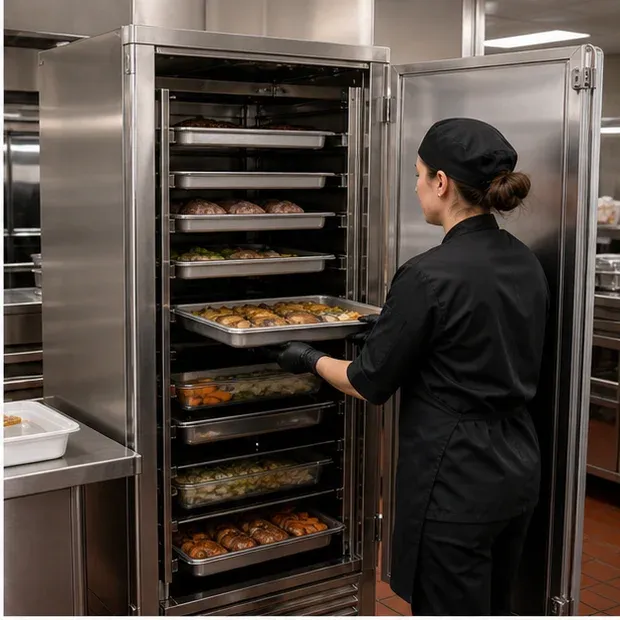
Operator loading and rotating prepared food trays in a commercial holding cabinet
Service flowMap loading, rotation, and service access

Translate production arrival into loading, staged rotation, replenishment, availability, and service-side withdrawal responsibilities.

Loading direction
Map where prepared product arrives and enters the holding flow.
Loading sequence
Describe placement and batch handoff.
Replenishment rhythm
Record routine and peak refill activity.
Service-side access
Explain how operators withdraw product for service.
Access frequency
Describe repeated opening qualitatively.
Batch rotation
Map identification, sequence, and product rotation.
Operator reach
Describe handling posture and approach.
Pan and tray handling
Record lifting, sliding, staging, and removal.
Production-to-service relationship
Explain how holding connects the production and service points.
Pass-through characteristics
Record them only where the real workflow requires them.
Mobility context
Describe movement between stations where applicable.
Service withdrawal
Map final removal and handoff into service.
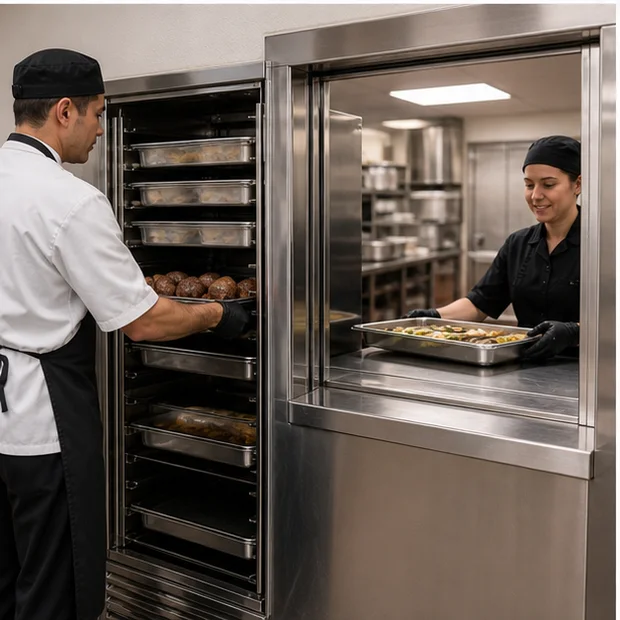
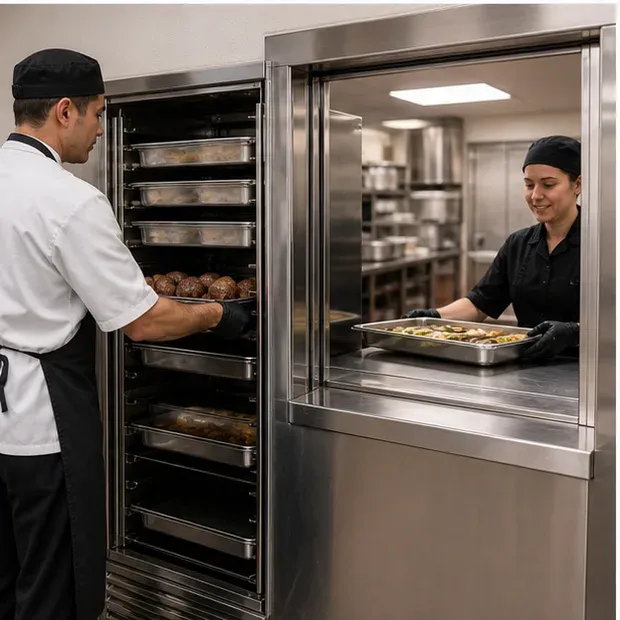
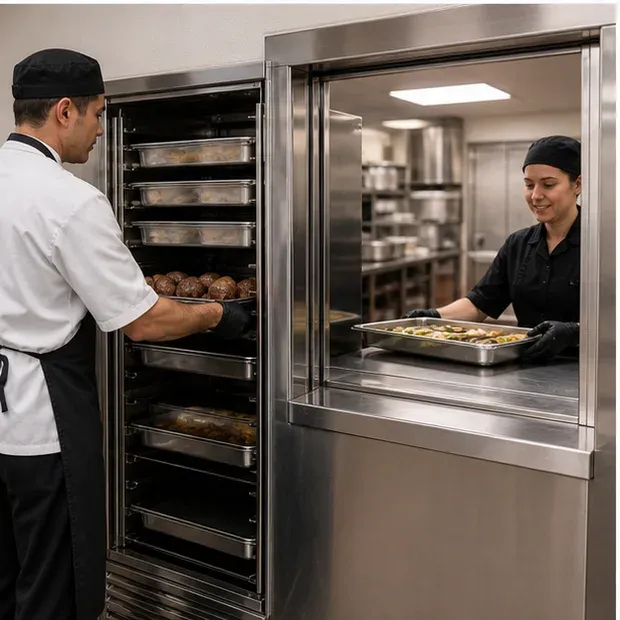
Prepared food transferred through a commercial holding cabinet between production and service operators
Bounded holding dutyBound holding duty and operating configuration

Constrain repeated service, condition maintenance, controls, cleaning, mobility, utilities, placement, and service access around the actual workflow.

Routine holding duty
Describe normal service availability.
Peak holding duty
Identify demanding turnover periods.
Holding duration
State the service window qualitatively.
Repeated access
Describe opening and withdrawal rhythm.
Condition stability
Define the acceptable qualitative condition throughout service.
Recovery responsibility
State readiness after repeated access without measured claims.
Control responsibility
Identify candidate evidence needed for operation.
Applicable moisture responsibility
Include only when relevant and candidate-supported.
Cleaning and residue access
Map removal, wipe-down, and reset.
Mobility and placement
Describe position or movement within the service workflow.
Destination utilities
Record available services for confirmation.
Surrounding workflow
Describe aisle and adjacent activity.
Service access
Record inspection and maintenance approach.
Prepared product → service workflow → holding duty

Output: a bounded Holding Cabinet service-holding requirement

Product condition, holding duration, turnover, replenishment rhythm, access workflow, and site responsibilities now provide CATERTOP with a Product Model review basis without automatic model selection.

Determine the practical holding configuration path

Translate service condition, duration, turnover, access, cleaning, mobility, utilities, and placement into candidate-level configuration questions.

Production and service operators using a commercial holding cabinet as a qualitative service-flow worksheet
Qualitative service-flow map; no temperature, capacity, tray-count, or recovery values implied.

Service condition and workflow create holding-system responsibility

  • Service-ready condition
  • Duration and turnover
  • Loading and replenishment
  • Service withdrawal
  • Cleaning and site
  1. Product and service-ready condition

    What condition must remain acceptable from production through service, and how is the product contained?

    Review applicable holding responsibility, container compatibility, load distribution, and candidate condition-maintenance evidence.

  2. Holding duration and turnover

    How long is each batch staged, and how quickly does inventory turn during routine and peak periods?

    Review holding duty, repeated-service readiness, control responsibility, and qualitative recovery evidence.

  3. Loading, rotation, and service access

    How does product enter, rotate, remain available, and leave during service?

    Review loading direction, access architecture, opening relationships, operator reach, and production-to-service workflow.

  4. Cleaning, mobility, utilities, and site

    How will the equipment be cleaned, positioned, moved where applicable, powered, and serviced?

    Review cleaning access, mobility and placement characteristics, destination utilities, clearances, and service conditions.

This path defines holding-system review responsibilities. It does not infer cooking, refrigerated preservation, proofing, capacity, or measured operating performance.

Explore representative Holding Cabinet configurations

Compare four overlapping design-stage configurations through one consistent service-duty inventory.

  • Installation / service context
  • Loading / access architecture
  • Product / pan / tray holding arrangement
  • Holding-duty / condition-maintenance responsibility
  • Cleaning / mobility / utilities / site basis
  1. Design-stage Front-access staged-service configuration in a commercial prepared-food service workflow

    Front-access staged-service configuration

    Prepared product is loaded and withdrawn from a shared service-facing approach.

    Installation / service context
    Fixed staging point beside production or service.
    Loading / access architecture
    Front access coordinates loading and withdrawal.
    Product / pan / tray holding arrangement
    Adaptable prepared-food container arrangement.
    Holding-duty / condition-maintenance responsibility
    Holding evidence follows the service window and repeated access.
    Cleaning / mobility / utilities / site basis
    Cleaning approach, placement, destination services, and surrounding workflow require confirmation.
    Request Model Review
  2. Design-stage Pass-through production-to-service configuration in a commercial prepared-food service workflow

    Pass-through production-to-service configuration

    Production loading and service withdrawal are coordinated across distinct working sides.

    Installation / service context
    Positioned between production and service workflows.
    Loading / access architecture
    Distinct loading and withdrawal directions support handoff.
    Product / pan / tray holding arrangement
    Container arrangement supports batch rotation between sides.
    Holding-duty / condition-maintenance responsibility
    Condition-maintenance responsibility follows turnover and opening from both workflows.
    Cleaning / mobility / utilities / site basis
    Two-sided access, cleaning, utilities, placement, and service approach require review.
    Request Model Review
  3. Design-stage Compact point-of-service holding configuration in a commercial prepared-food service workflow

    Compact point-of-service holding configuration

    A restrained service-point direction for direct operator access and short staging loops.

    Installation / service context
    Compact placement near the point of service.
    Loading / access architecture
    Direct access supports repeated operator withdrawal.
    Product / pan / tray holding arrangement
    Prepared-food containers follow a focused service arrangement.
    Holding-duty / condition-maintenance responsibility
    Duty is defined by short staging, turnover, and repeated access.
    Cleaning / mobility / utilities / site basis
    Counter or floor relationship, cleaning, utilities, placement, and service access require confirmation.
    Request Model Review
  4. Design-stage Mobile production-holding configuration in a commercial prepared-food service workflow

    Mobile production-holding configuration

    A movable staging direction connecting changing production and service positions.

    Installation / service context
    Mobile placement serves changing staging or service positions.
    Loading / access architecture
    Operator access coordinates loading, movement, and withdrawal.
    Product / pan / tray holding arrangement
    Container arrangement must remain practical through relocation and service.
    Holding-duty / condition-maintenance responsibility
    Holding responsibility follows movement, turnover, and repeated access.
    Cleaning / mobility / utilities / site basis
    Mobility, floor context, cleaning, utilities, parking position, and service access require review.
    Request Model Review

These are representative composite configurations, not Product Subcategories, canonical Product Models, or exclusive classes. Applicability follows the bounded service condition, duration, workflow, and candidate-level site confirmation.

Establish the pre-shortlist service-duty review basis

Verify whether a future candidate maintains the required service-ready condition throughout the real loading, holding, rotation, replenishment, and withdrawal workflow.

Prepared product and incoming condition
Confirm the product state entering holding.
Service-ready condition
Verify the qualitative condition-maintenance responsibility.
Container compatibility
Review pan, tray, or container handling without assuming a fixed inventory.
Holding duration and turnover
Test candidate evidence against the real service window and movement.
Batch-arrival rhythm
Verify how production loads enter routine and peak service.
Holding arrangement and load distribution
Review usable organization as candidate evidence rather than geometry-led selection.
Loading and service access
Confirm approach, opening, withdrawal, and operator reach.
Replenishment and batch rotation
Verify availability and rotation across the service rhythm.
Holding-system and recovery evidence
Review qualitative condition maintenance after repeated access.
Controls and applicable moisture responsibility
Confirm only candidate-supported operating responsibilities.
Cleaning and operator access
Verify removal, residue access, reset, and safe handling.
Mobility, utilities, placement, and service
Confirm destination fit and maintenance access.
Operator rotating prepared food trays in a commercial holding cabinet for qualitative candidate review
Candidate review zones
  • Product / container interface
  • Staging / rotation flow
  • Access / replenishment interface
  • Holding / control responsibility
  • Placement / cleaning / service envelope

Output: a bounded Holding Cabinet candidate-review basis

CATERTOP can test future Product Models against the service condition, duration, turnover, access, holding responsibility, cleaning, mobility, utility, placement, and service requirements without assuming automatic model selection.

Assemble the supplier confirmation dossier

Align buyer-supplied service facts with the candidate-specific holding, workflow, installation, and commercial evidence CATERTOP reviews or confirms.

  • Prepared covered food pans ready for commercial holding and service review

    Product / service condition

    Prepared product, incoming state, holding window, turnover, and required service condition.

  • Operator loading and rotating trays in a holding cabinet

    Loading / rotation / access

    Loading, replenishment, batch rotation, operator reach, and withdrawal workflow.

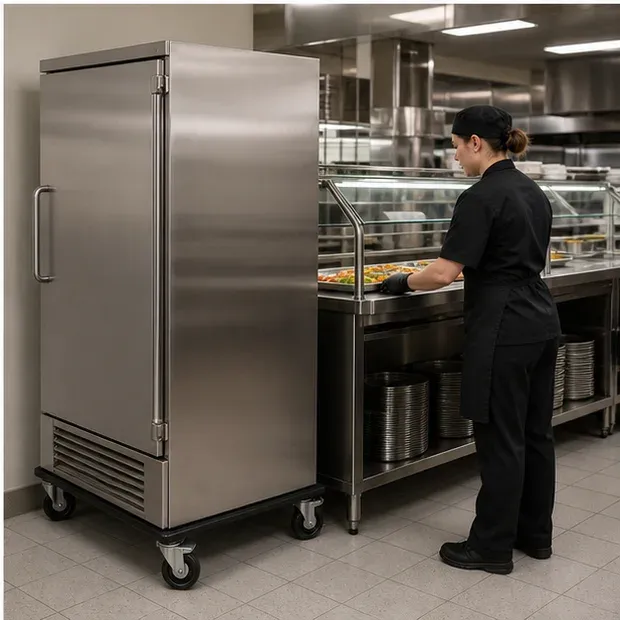
  • Mobile holding cabinet positioned beside a commercial service line

    Site / mobility / service

    Placement, movement, cleaning, destination services, and maintenance approach.

  • Commercial holding cabinet in a production-to-service setting representing destination confirmation

    Packing / destination

    Protective packing and destination preparation carried into commercial review.

  • Product, service condition, holding duration, and duty confirmation

    Buyer provides

    Product, incoming condition, required service-ready condition, holding duration, turnover, and service duty.

    CATERTOP reviews / confirms

    Applicable holding responsibility and evidence required to assess condition maintenance.

  • Loading, access, replenishment, and holding-configuration confirmation

    Buyer provides

    Container format, loading direction, replenishment, rotation, service access, and staging workflow.

    CATERTOP reviews / confirms

    Holding arrangement, access architecture, production-to-service relationship, and candidate configuration.

  • Controls, operator workflow, cleaning, and safety-related confirmation

    Buyer provides

    Control needs, repeated-opening context, operator workflow, cleaning, and safety context.

    CATERTOP reviews / confirms

    Candidate controls, operating evidence, cleaning access, operator interface, and applicable safety-related documentation.

  • Dimensions, mobility, utilities, placement, and service confirmation

    Buyer provides

    Placement, mobility needs, destination utilities, surrounding workflow, clearance, and service access.

    CATERTOP reviews / confirms

    Candidate dimensions, mobility characteristics, utility compatibility, placement, access, and service conditions.

  • Packing, destination, and commercial documentation

    Buyer provides

    Quantity, destination, schedule, branding, packing, inspection, and documentation requirements.

    CATERTOP reviews / confirms

    Packing basis, destination requirements, available documentation, and commercial confirmation scope.

The dossier records confirmation responsibilities for a future candidate. It does not imply that every certificate, drawing, test record, or document is already available.

Prepare the Holding Cabinet requirement

Send the five structured requirement groups CATERTOP needs to review applicable Product Models.

Include these details in your inquiry

5 brief points
  1. Product and required service-ready conditionPrepared product, incoming condition, required service state, relevant condition sensitivities, and production-to-service context.
  2. Container, loading, and holding requirementPan, tray, or container format, loading direction, holding arrangement, batch rotation, and service-side withdrawal.
  3. Holding duration, turnover, and replenishment rhythmExpected holding window, batch arrival, routine and peak turnover, repeated access, and qualitative recovery responsibility.
  4. Access, controls, cleaning, mobility, utilities, and siteOperator workflow, control context, applicable moisture responsibility, cleaning, placement, mobility, destination services, clearance, and service access.
  5. Order and project contextQuantity, destination, timing, OEM or branding, packing, documentation, inspection, and commercial requirements.

Send the written brief through the Products inquiry.