Procurement Guide

Commercial Milkshake Machine

Define beverage ingredients, required mixed or aerated result, and repeated service duty before reviewing vessel, loading, spindle interaction, serving, cleaning, and site.

First procurement question

What ingredients enter the vessel, what milkshake result is required, and what repeated service rhythm must the machine support?

Commercial Milkshake Machine shown as design-stage technical catalogue equipment

Define the Commercial Milkshake Machine requirement

Start with define ingredient condition, formulation, vessel loading, and preparation, define mixed, aerated, blended, and service presentation requirements, and bound drink cadence, vessel turnaround, repeated mixing, and cleaning.

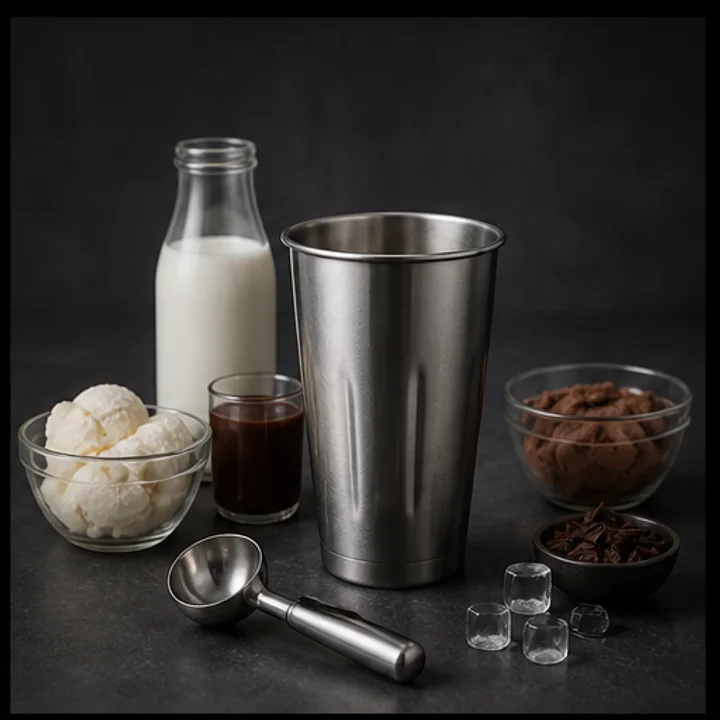
Commercial Milkshake Machine incoming requirement context
Prepared beverage ingredients

Beverage ingredients

Define ingredient condition, formulation, vessel loading, and preparation

Ingredient basis
Describe dairy or alternative base, flavor ingredients, and additions relevant to mixing.
Incoming condition
Record temperature, viscosity, preparation, and loading state qualitatively.
Vessel loading
Explain cup or mixing-vessel preparation and operator sequence.
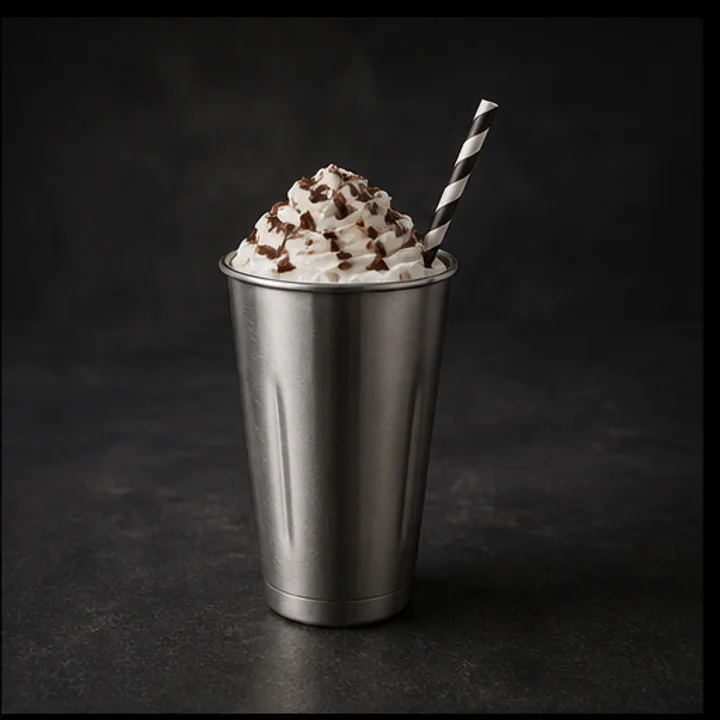
Commercial Milkshake Machine required result context
Prepared milkshake

Milkshake result

Define mixed, aerated, blended, and service presentation requirements

Texture result
Describe the required qualitative mixed or aerated condition.
Uniformity
State ingredient incorporation and repeatability expectations.
Service presentation
Explain serving vessel, immediate handoff, and downstream additions.
Commercial Milkshake Machine repeated production-duty context
Repeated milkshake service

Service preparation

Bound drink cadence, vessel turnaround, repeated mixing, and cleaning

Service context
Describe counter, restaurant, or beverage-station use.
Preparation rhythm
Record loading, mixing, removal, and serving cadence.
Vessel turnaround
Explain rinsing, cleaning, changeover, and reset between drinks.

Determine the Commercial Milkshake Machine equipment path

Translate ingredient condition, target texture, vessel handling, and service rhythm into the mixing and operator architecture CATERTOP should review.

  1. Commercial Milkshake Machine: Ingredient loading affects Vessel and support basis
    Ingredient loadingVessel and support basis
  2. Commercial Milkshake Machine: Milkshake result affects Mixing and spindle interaction
    Milkshake resultMixing and spindle interaction
  3. Commercial Milkshake Machine: Service rhythm affects Removal and serving workflow
    Service rhythmRemoval and serving workflow
  4. Commercial Milkshake Machine: Cleaning and site affects Access and placement basis
    Cleaning and siteAccess and placement basis
Requirement signalEquipment implication
  • Ingredients and vessel loading

    How must ingredients and the mixing vessel be presented?

    Review vessel support, loading clearance, and operator access.

  • Required texture and uniformity

    What mixing interaction creates the target result?

    Review spindle or mixing architecture and result-control basis.

  • Repeated drink service

    How will vessels load, mix, leave, and reset?

    Review station layout, serving handoff, vessel turnaround, and repeated duty.

  • Cleaning and site

    What sanitation and placement conditions govern use?

    Review contact-area cleaning, splash context, utilities, clearance, and counter fit.

The equipment path narrows the architecture CATERTOP should review; it does not select a final Commercial Milkshake Machine model automatically.

Explore the Commercial Milkshake Machine product range

Compare representative Commercial Milkshake Machine configurations across installation, vessel loading, mixing, serving, cleaning, and site requirements.

  • Installation / station
  • Vessel loading
  • Mixing / result control
  • Serving / duty
  • Cleaning / site
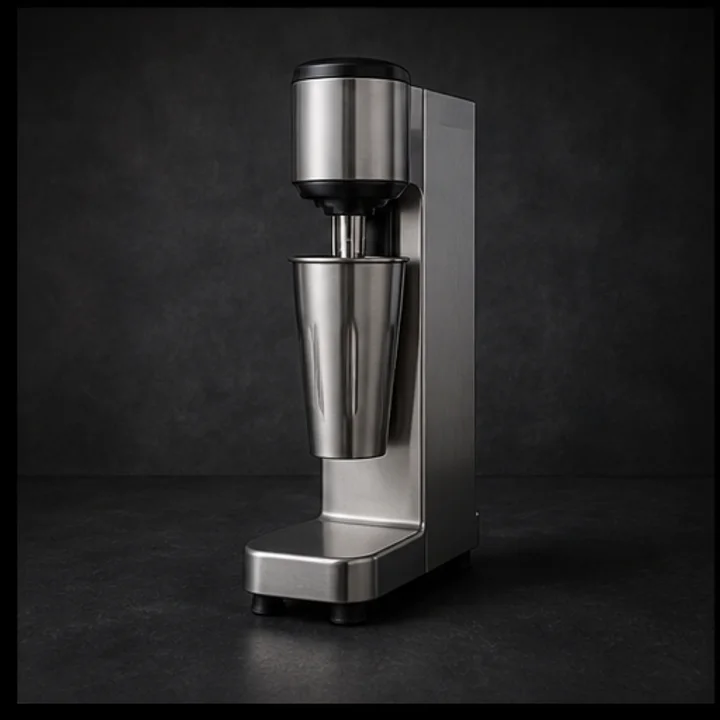
  1. Representative compact single-station configuration for Commercial Milkshake Machine review

    Compact single-station configuration

    A contained counter format for direct vessel loading and service.

    Installation / station
    Compact countertop station
    Vessel loading
    Single operator-loaded vessel
    Mixing / result control
    Focused mixing interaction
    Serving / duty
    Direct drink removal and serving
    Cleaning / site
    Contact-area cleaning and counter placement
    Request Model Review
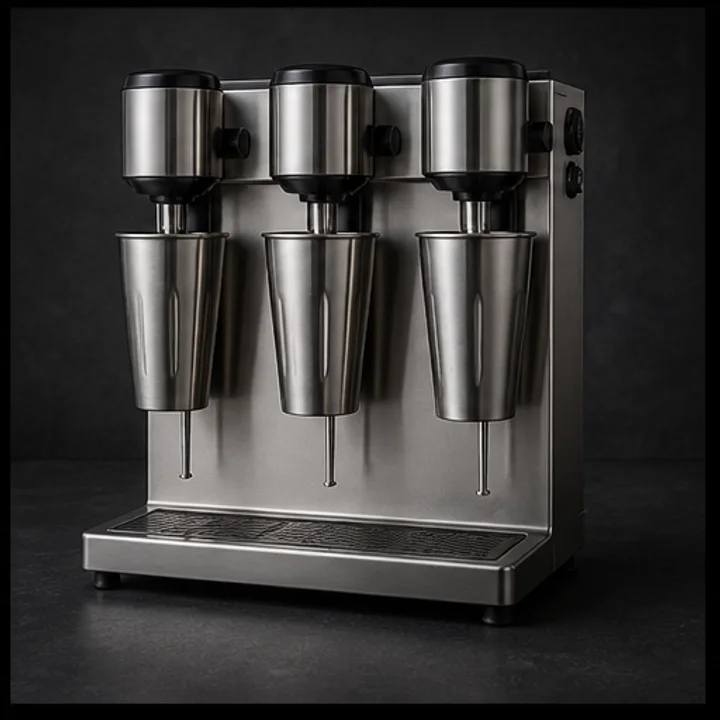
  2. Representative multi-station service configuration for Commercial Milkshake Machine review

    Multi-station service configuration

    A broader counter format for coordinated drink preparation.

    Installation / station
    Expanded countertop station
    Vessel loading
    Multiple vessel positions
    Mixing / result control
    Parallel mixing workflow review
    Serving / duty
    Repeated multi-drink service
    Cleaning / site
    Shared cleaning access and workstation clearance
    Request Model Review
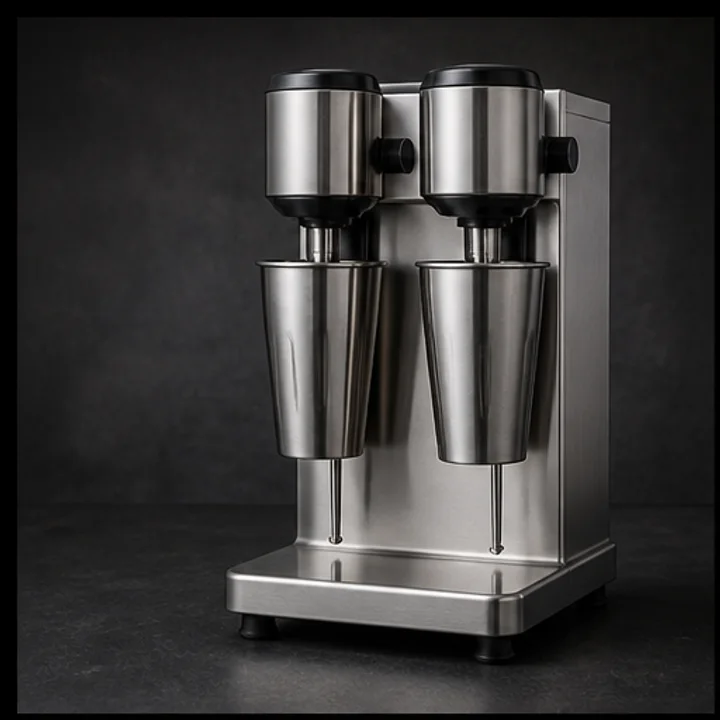
  3. Representative floor-supported preparation configuration for Commercial Milkshake Machine review

    Floor-supported preparation configuration

    A dedicated service format with structured vessel and operator workflow.

    Installation / station
    Floor-supported service format
    Vessel loading
    Operator vessel staging
    Mixing / result control
    Process-led mixing basis
    Serving / duty
    Repeated removal and handoff
    Cleaning / site
    Splash, cleaning, utilities, and site review
    Request Model Review
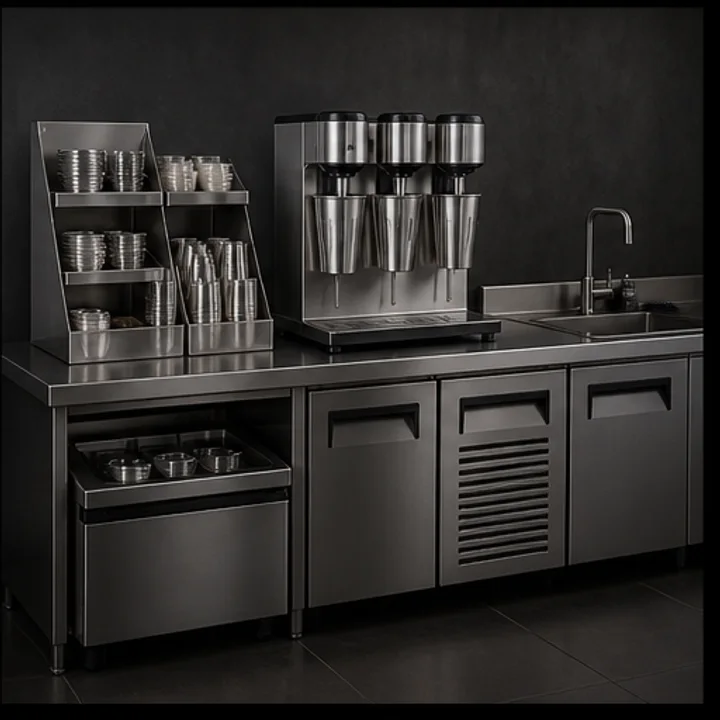
  4. Representative integrated beverage workcell for Commercial Milkshake Machine review

    Integrated beverage workcell

    A coordinated arrangement connecting ingredients, vessels, mixing, and service support.

    Installation / station
    Integrated beverage workstation
    Vessel loading
    Adjacent ingredient and vessel staging
    Mixing / result control
    Coordinated mixing workflow
    Serving / duty
    Serving and support interface
    Cleaning / site
    Cleaning zones and site integration
    Request Model Review

These design-stage configurations show a comparison structure, not canonical Product Models or exhaustive Commercial Milkshake Machine classes. CATERTOP reviews applicable models against the bounded requirement.

Establish the pre-shortlist review basis

Retain ingredient, texture, vessel, mixing, serving, cleaning, operator, and site facts used to verify candidates.

Ingredients and condition
Product basis, temperature, viscosity, preparation, and loading sequence.
Required milkshake result
Texture, aeration, incorporation, consistency, repeatability, and service presentation.
Vessel and loading
Cup or vessel format, support, loading clearance, and operator access.
Mixing and duty
Mixing interaction, result control, drink cadence, and repeated operation.
Serving and operator flow
Removal, handoff, vessel staging, changeover, and workflow.
Cleaning and site
Contact-area access, splash context, utilities, placement, clearance, and service.
Commercial Milkshake Machine candidate shown for qualitative fit review
Candidate review zones
  • Vessel support
  • Mixing interaction
  • Result-control context
  • Serving / operator zone
  • Cleaning / site interface

Output: a bounded Commercial Milkshake Machine requirement

The product, result, duty, process, operator, cleaning, and site facts are structured for CATERTOP to assess applicable Product Models.

Assemble the supplier confirmation dossier

Connect the bounded Commercial Milkshake Machine requirement to configuration, operating, site, and order confirmations before commercial release.

  • Commercial Milkshake Machine milkshake result confirmation context

    Milkshake result

    Texture, uniformity, and serving-condition review.

  • Commercial Milkshake Machine mixing configuration confirmation context

    Mixing configuration

    Vessel, loading, mixing, and removal relationship.

  • Commercial Milkshake Machine site interface confirmation context

    Site interface

    Placement, cleaning, splash context, and utilities.

  • Commercial Milkshake Machine packing / destination confirmation context

    Packing / destination

    Protection and dispatch preparation context.

  • Ingredients, milkshake result, and service-duty confirmation

    Buyer provides

    Ingredient condition, target texture, vessel workflow, and preparation rhythm.

    CATERTOP reviews / confirms

    Candidate mixing basis and applicable duty are reviewed.

  • Vessel, mixing, result-control, and serving confirmation

    Buyer provides

    Loading, mixing interaction, texture control, removal, and handoff.

    CATERTOP reviews / confirms

    Vessel support, process, control, and service configuration are confirmed.

  • Cleaning, operator, guarding, and safety-related confirmation

    Buyer provides

    Contact-area cleaning, operator access, splash context, and conditions.

    CATERTOP reviews / confirms

    Candidate sanitation, access, and operator-facing details are reviewed.

  • Dimensions, utilities, placement, and site confirmation

    Buyer provides

    Counter or workstation space, access, destination power, and service context.

    CATERTOP reviews / confirms

    Dimensions, utility basis, clearance, and placement are confirmed.

  • Packing and destination documentation

    Buyer provides

    Quantity, destination, packing, branding, and document needs.

    CATERTOP reviews / confirms

    Protection, dispatch preparation, and applicable documents are reviewed.

The dossier defines confirmation responsibilities; it does not claim that every document, test, or destination requirement is universally applicable.

Prepare the Commercial Milkshake Machine requirement

Send the concise requirement groups CATERTOP needs for Commercial Milkshake Machine model review and quotation.

Include these details in your inquiry

5 brief points
  1. Ingredients and milkshake resultIngredient basis, condition, vessel loading, required texture, uniformity, and serving presentation.
  2. Service dutyDrink cadence, repeated preparation, vessel turnaround, serving, and reset.
  3. Vessel, mixing, and handlingVessel support, loading, mixing action, result control, removal, and cleaning.
  4. Site and utilitiesPlacement, access, destination power, splash context, clearance, and service conditions.
  5. Order and project contextQuantity, destination, timing, branding, packing, and documentation needs.

Send the written brief through the Products inquiry.