Procurement Guide

Commercial Blender

Define the incoming ingredients, required blended result, and batch duty; then carry the vessel, processing, discharge, cleaning, and site requirements into model review and quotation.

First procurement question

What ingredients enter the vessel, what blended result is required, and what batch or service duty must the Commercial Blender sustain?

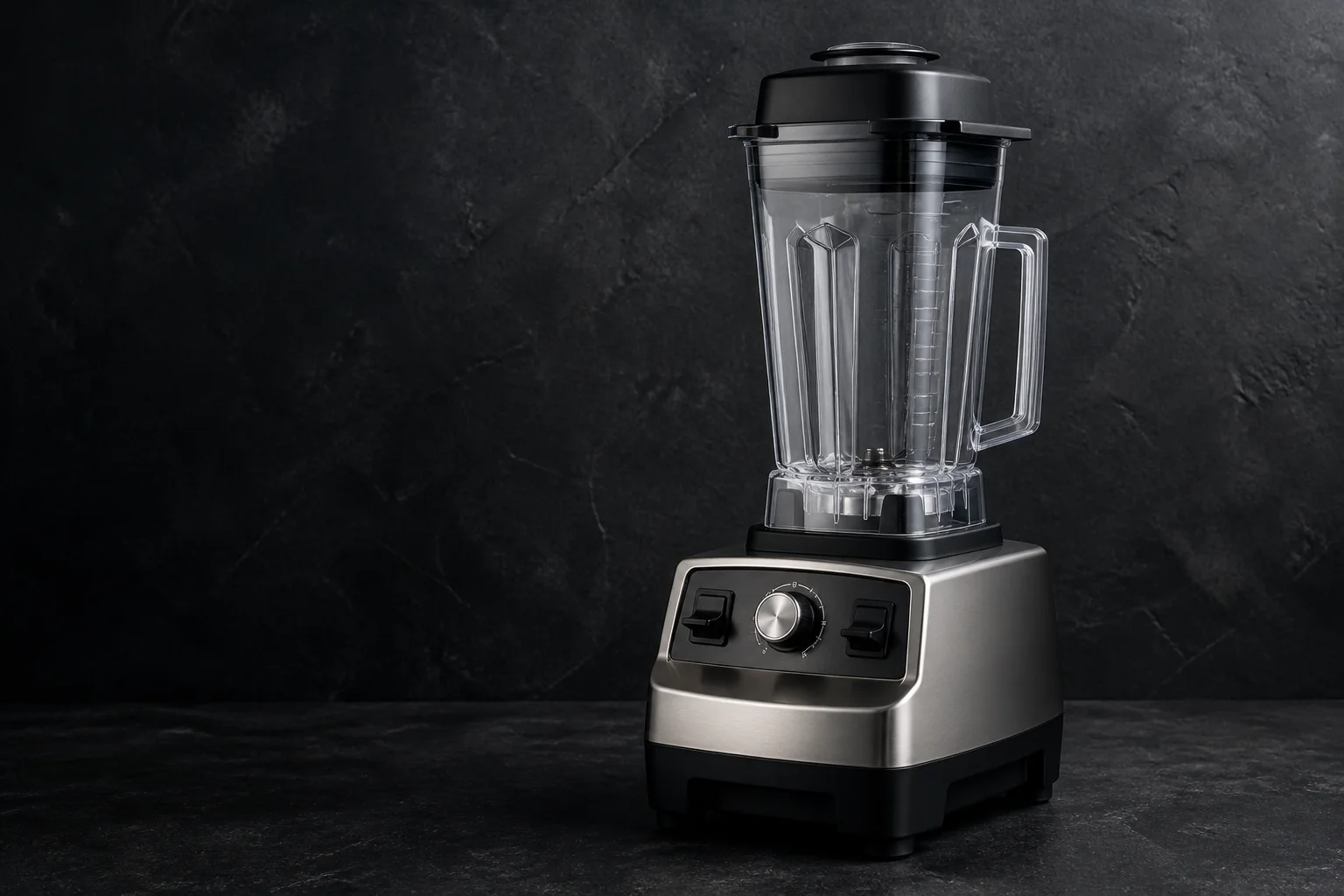
Professional commercial countertop blender with stainless-steel base and removable clear vessel on a dark technical studio surface

Define the Commercial Blender requirement

Start with what enters the vessel, the blended condition needed downstream, and the batch rhythm the equipment must sustain.

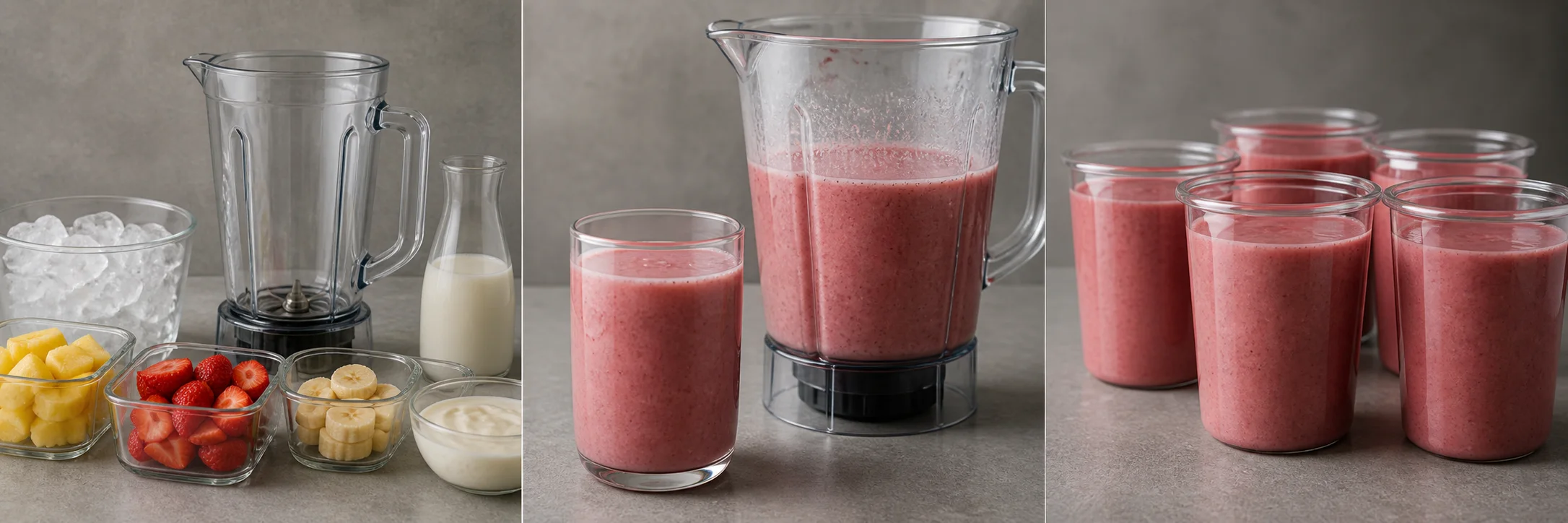
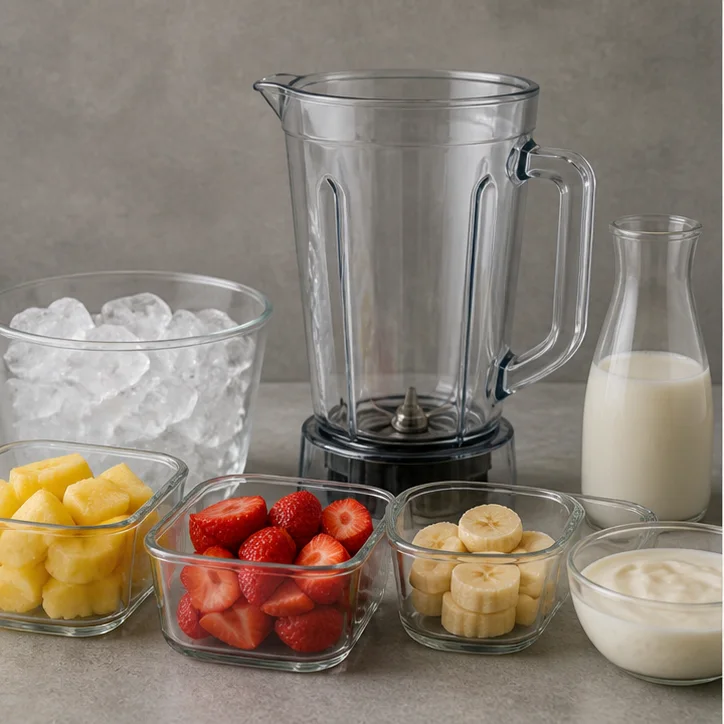
Prepared fruit, liquid, ice, and an empty commercial blender vessel arranged for loading review
Incoming ingredients

Incoming ingredients

Define what reaches the blender vessel.

Ingredient or product
Identify the ingredients or product without assuming universal processing compatibility.
Solids and liquids
Describe the solids-to-liquids relationship where it affects loading and processing.
Incoming condition
Record temperature, firmness, frozen state, viscosity, or other relevant condition.
Preparation and loading
Explain pre-cutting, measuring, sequencing, and how ingredients enter the vessel.
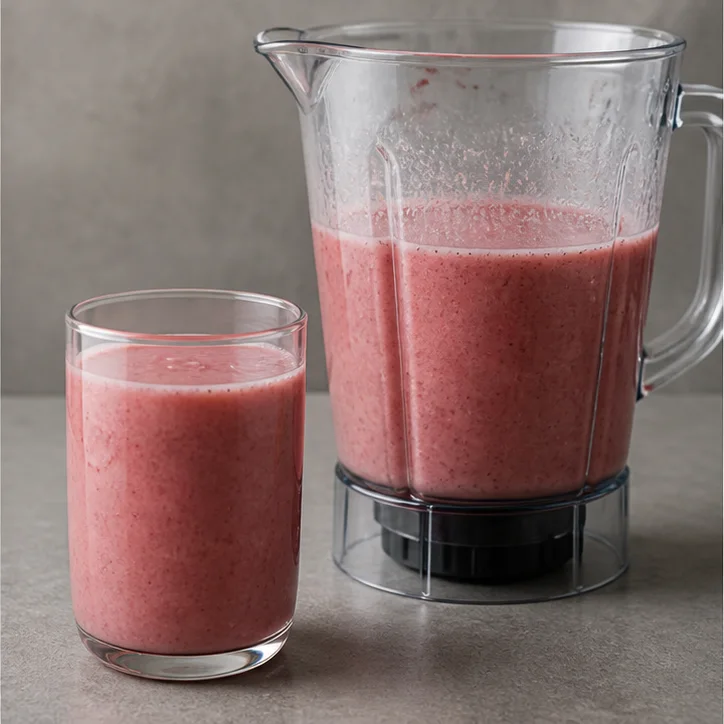
Uniform blended beverage in a clear vessel and serving glass for consistency review
Blended result

Required blended result

Define the condition that must leave the vessel.

Texture and consistency
State the qualitative texture or consistency required after blending.
Degree of breakdown
Describe how ingredients should be reduced, dispersed, or retained in the result.
Uniformity and repeatability
Record the result consistency expected within and across batches.
Downstream use
Explain how the blended product will be served, transferred, or processed next.
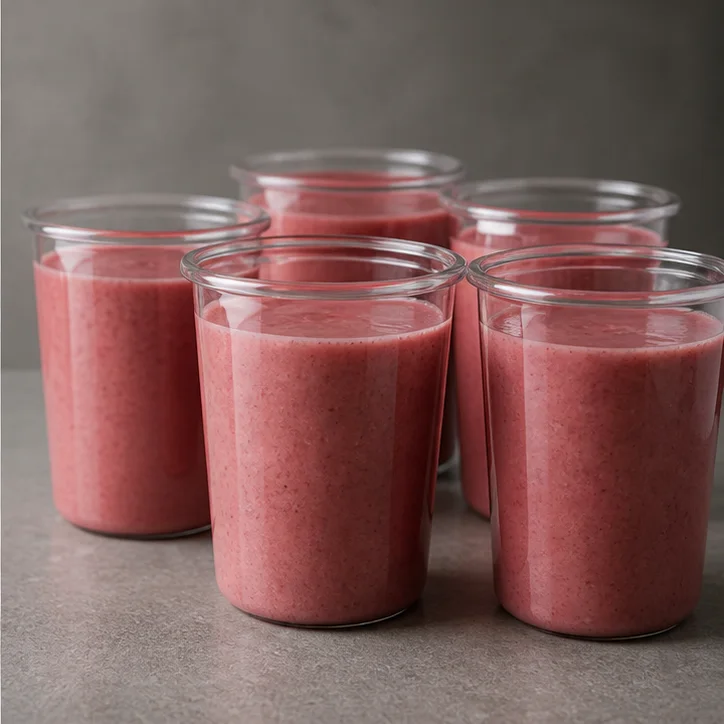
Multiple prepared beverage portions representing repeated commercial blending duty
Repeated batches

Batch and production duty

Bound how the result must be repeated in operation.

Batch context
Describe the practical batch or serving context without substituting nominal vessel size.
Batch frequency
Explain how often ingredients are loaded, processed, and discharged.
Working rhythm
Describe intermittent service, repeated cycles, or longer preparation runs.
Discharge and handling
Record pouring, transfer, serving, container change, and downstream handling needs.

Determine the Commercial Blender equipment path

Translate the bounded requirement into the vessel, processing, operating-cycle, discharge, cleaning, and placement architecture the blender must provide.

  1. Prepared ingredients and empty vessel showing the Commercial Blender loading basis
    Ingredient & loading basisVessel & loading architecture
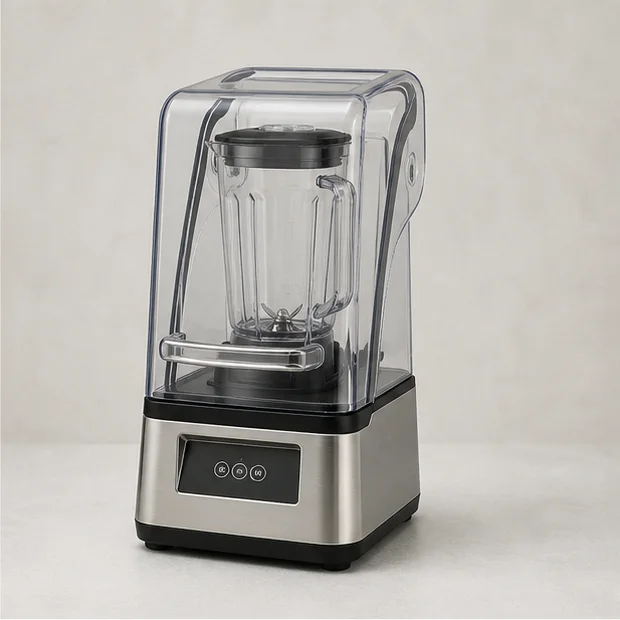
  2. Covered commercial blender configuration representing processing and control review
    Required blended resultProcessing & control basis
  3. Repeated prepared portions representing commercial blender operating-cycle review
    Batch & service dutyOperating-cycle format
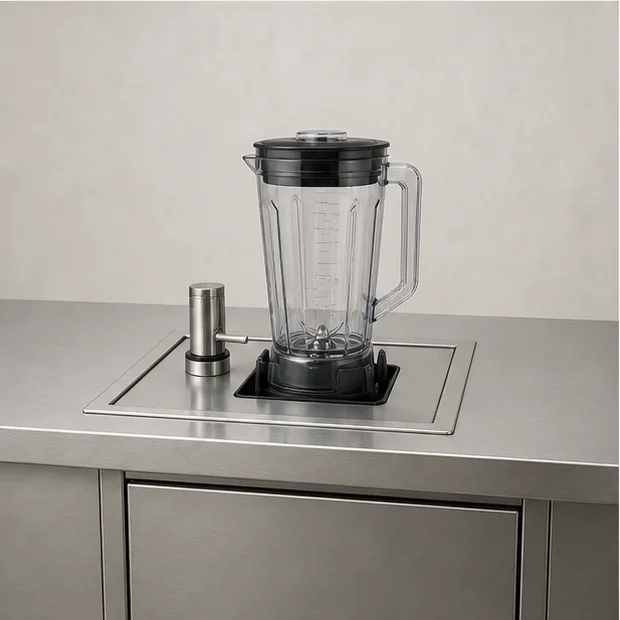
  4. In-counter commercial blender workstation representing discharge, cleaning, access, and placement review
    Discharge, cleaning & siteReset, access & placement
Requirement signalEquipment implication
  • Ingredient condition, solids and liquids, preparation, and loading method

    How must ingredients enter, occupy, and move within the vessel?

    Vessel, loading, and ingredient-handling architecture to review

  • Required texture, degree of breakdown, uniformity, and downstream use

    What processing and result-control basis must produce the required condition?

    Vessel geometry, processing action, and control basis to review

  • Batch context, frequency, working rhythm, and repeated use

    What loading, processing, discharge, and reset cycle must be sustained?

    Operating-cycle, vessel-change, and repeated-batch architecture

  • Discharge, cleaning, operator workflow, utilities, and site

    How will product leave, the vessel reset, and the equipment be cleaned and placed?

    Discharge, cleaning, service-access, utility, and placement basis

Equipment paths identify the architecture to review. Exact vessel, processing, control, safety, cleaning, dimension, and utility information remains model-specific.

Explore the Commercial Blender product range

Compare representative Commercial Blender configurations across installation, vessel, processing, batch workflow, and service requirements; CATERTOP uses the bounded requirement to identify applicable models.

  • Installation format
  • Vessel / loading basis
  • Processing / result control
  • Batch / service workflow
  • Cleaning / service / site
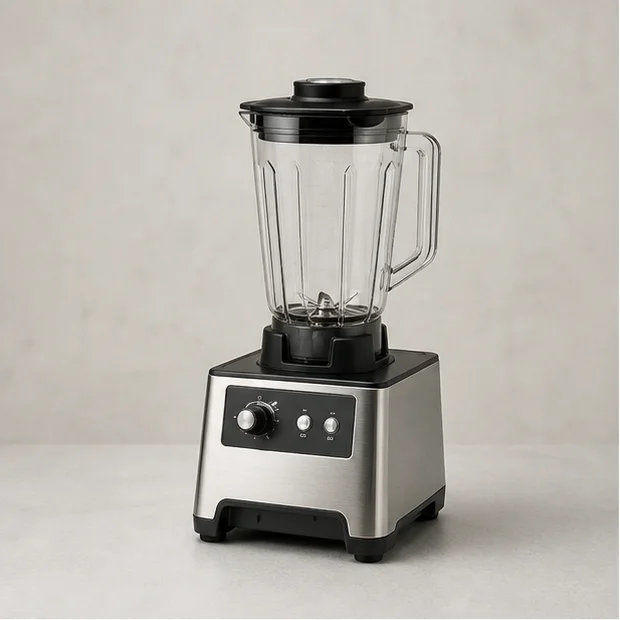
  1. Open-counter commercial blender with stainless-steel base and removable clear vessel

    Open-counter removable-vessel configuration

    A commercial blending configuration built around direct operator access to a removable vessel on an open counter.

    Installation format
    Open countertop placement within the preparation workflow.
    Vessel / loading basis
    Removable operator-loaded vessel with direct access.
    Processing / result control
    Result and control basis reviewed against the ingredient condition.
    Batch / service workflow
    Load, process, remove, pour or transfer, and reset.
    Cleaning / service / site
    Vessel handling, counter access, cleaning, and service review.
    Request Model Review
  2. Covered countertop commercial blender with removable vessel inside a clear operating enclosure

    Covered-countertop vessel configuration

    A countertop commercial blending configuration combining a removable vessel with an enclosed operating area.

    Installation format
    Covered countertop workstation.
    Vessel / loading basis
    Removable vessel loaded before the operating area is closed.
    Processing / result control
    Processing and repeatability reviewed with the covered workflow.
    Batch / service workflow
    Load, close, process, reopen, discharge, and reset.
    Cleaning / service / site
    Vessel, cover, counter, cleaning, and service-access review.
    Request Model Review
  3. Commercial blender vessel seated in a flush stainless-steel in-counter workstation

    In-counter blending-workstation configuration

    A commercial blending configuration that places the vessel and drive interface within a coordinated counter workstation.

    Installation format
    In-counter placement integrated with the work surface.
    Vessel / loading basis
    Removable vessel loaded and seated within the workstation.
    Processing / result control
    Result control reviewed with the installed operating interface.
    Batch / service workflow
    Counter-integrated loading, processing, removal, and handoff.
    Cleaning / service / site
    Cutout, access, cleaning, utility, and service relationship.
    Request Model Review
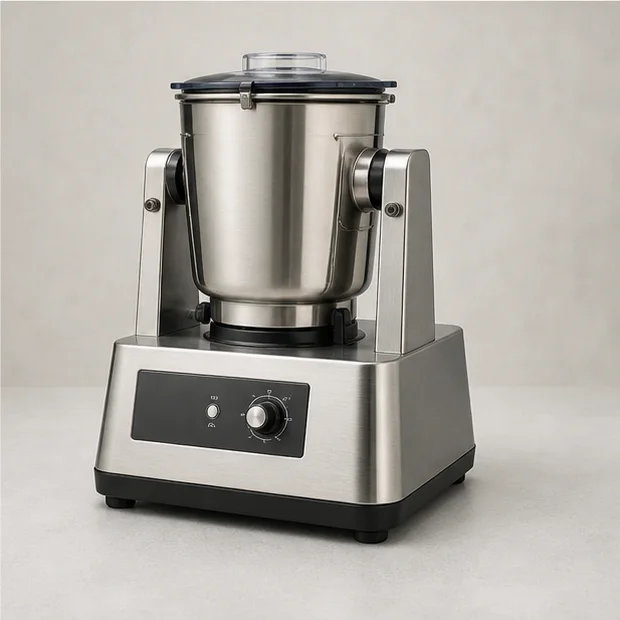
  4. Heavy-duty commercial countertop blender with large stainless-steel removable batch vessel

    Large-vessel countertop batch configuration

    A broader commercial blending configuration centered on a larger removable vessel and batch-production workflow.

    Installation format
    Heavy-duty countertop placement with a broader work envelope.
    Vessel / loading basis
    Larger removable vessel with operator-managed loading.
    Processing / result control
    Processing basis reviewed across the intended batch condition.
    Batch / service workflow
    Larger-batch loading, processing, discharge, and vessel reset.
    Cleaning / service / site
    Vessel handling, support, cleaning access, and placement review.
    Request Model Review

Exact vessel compatibility, processing system, controls, dimensions, utilities, safety information, and documentation require CATERTOP review.

Establish the pre-shortlist review basis

After browsing the range, consolidate the facts CATERTOP uses to verify which Commercial Blender models fit the blended result, batch workflow, and site.

Ingredients and incoming condition
Ingredient or product type, solids and liquids, temperature, firmness, viscosity, and relevant condition.
Preparation and loading basis
Pre-cutting, measuring, loading sequence, vessel access, and operator handling.
Required blended result
Texture, consistency, degree of breakdown, uniformity, and repeatability requirement.
Downstream use
How the blended product will be served, transferred, or used by the next process.
Batch and production duty
Batch context, frequency, working rhythm, repeated cycles, and service expectation.
Vessel, processing, and discharge basis
Vessel workflow, processing relationship, result-control need, pouring, transfer, and reset.
Cleaning and operator conditions
Vessel handling, cleaning method, operator workflow, access, and safety-related context.
Utilities and site
Destination supply, counter or workstation placement, access, clearance, and service conditions.
Commercial Blender shown as a qualitative vessel, process, operator, cleaning, and site-fit review worksheet
Candidate review zones
  • Vessel / loading zone
  • Process / result-control context
  • Operator / discharge area
  • Cleaning / service access
  • Site / placement interface

Output: a bounded Commercial Blender requirement

The requirement now combines the incoming ingredients, blended result, batch duty, equipment path, and review basis. CATERTOP uses it to assess applicable models; it does not automatically select equipment.

Assemble the supplier confirmation dossier

Align the bounded requirement with the vessel, processing, cleaning, site, and order information CATERTOP reviews before commercial readiness.

  • Incoming ingredients, blended result, and repeated portions shown for Commercial Blender requirement review

    Product / blended result

    Incoming ingredients and blended-result condition carried into review.

  • Covered commercial blender vessel and operating area shown for configuration review

    Vessel / processing

    Vessel, loading, processing, control, discharge, and operator context.

  • In-counter commercial blender workstation shown for placement and service-interface review

    Site / service interface

    Placement, access, utility, cleaning, and service information to confirm.

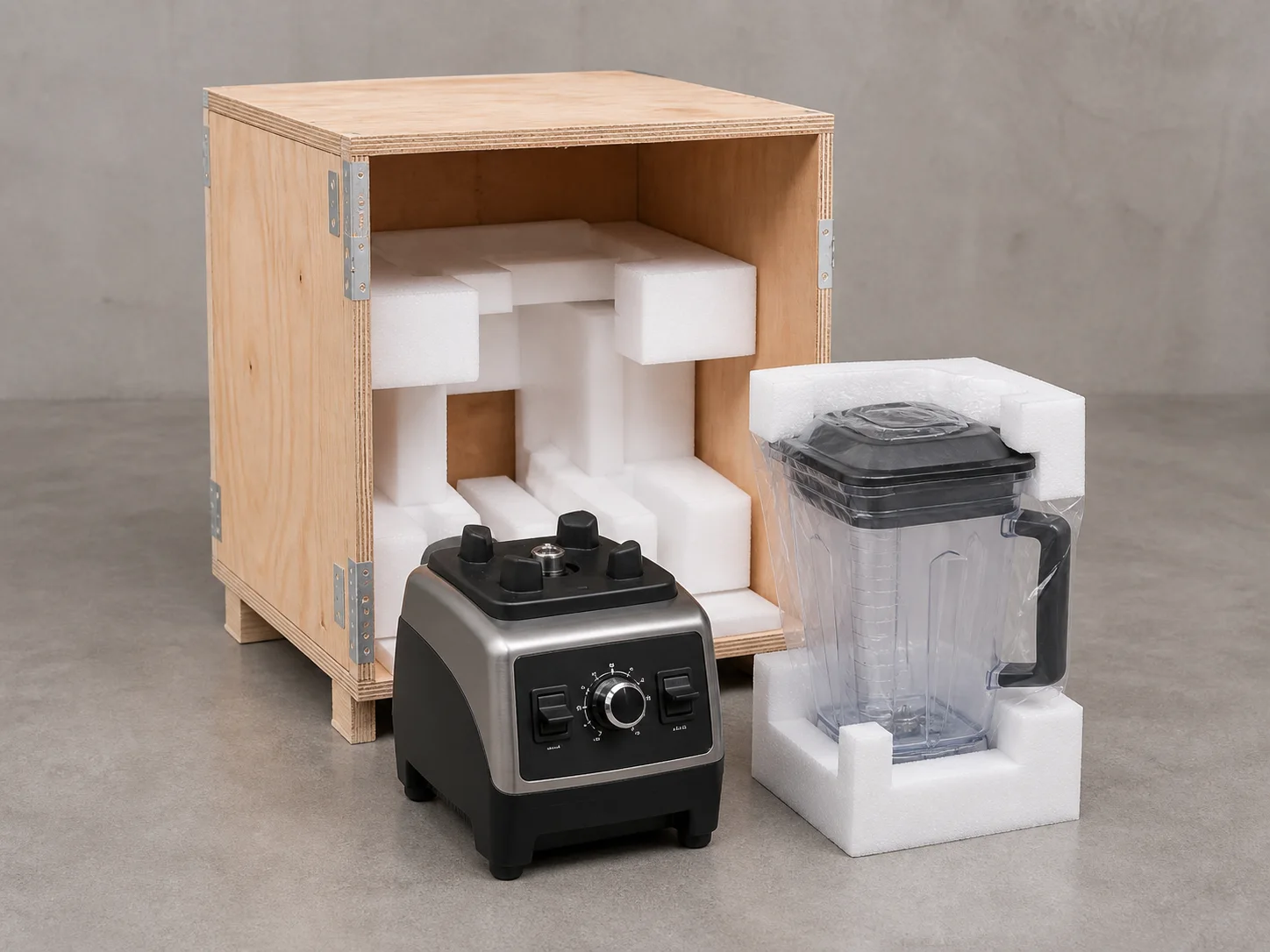
  • Commercial Blender base and removable vessel protected beside an export packing crate

    Packing / destination

    Protective packing and destination preparation carried into order review.

  • Product, blended result, and batch-duty confirmation

    Buyer provides

    Ingredients, condition, preparation, required result, downstream use, and batch-duty context.

    CATERTOP reviews / confirms

    Applicable blender direction and duty basis to carry into candidate review.

  • Vessel, loading, processing, and discharge-configuration confirmation

    Buyer provides

    Loading method, vessel workflow, result-control need, batch rhythm, discharge, and reset requirements.

    CATERTOP reviews / confirms

    Applicable vessel, loading, processing, control, discharge, and operating configuration.

  • Cleaning, operator-workflow, and safety-related confirmation

    Buyer provides

    Vessel handling, cleaning method, operator access, work sequence, and safety context.

    CATERTOP reviews / confirms

    Cleaning access, operator interface, safety-related information, and available documentation for the reviewed equipment.

  • Dimensions, utilities, placement, and site confirmation

    Buyer provides

    Destination supply, placement envelope, loading and discharge access, clearance, and service context.

    CATERTOP reviews / confirms

    Exact dimensions, utility requirements, placement information, and service access for the reviewed equipment.

  • Packing and destination documentation

    Buyer provides

    Quantity, destination, timing, packing, branding, inspection, and documentation requirements.

    CATERTOP reviews / confirms

    Packing preparation and destination or order documentation applicable to the project.

Dossier content depends on the reviewed equipment direction, selected configuration, and destination or order requirements. It is a confirmation register, not a claim that every document is already available.

Prepare the Commercial Blender requirement

Send the five requirement groups CATERTOP needs for model review and quotation.

Include these details in your inquiry

5 brief points
  1. Product and blended resultIngredients, condition, solids and liquids, preparation, required texture, consistency, and downstream use.
  2. Batch and production dutyBatch context, frequency, working rhythm, repeated cycles, and expected service use.
  3. Vessel, processing, and dischargeLoading, vessel workflow, result control, processing context, pouring or transfer, cleaning, and reset needs.
  4. Site and utilitiesCounter or workstation placement, destination power, access, clearance, cleaning, and service conditions.
  5. Order and project contextQuantity, destination, timing, OEM or branding, packing, documentation, and inspection needs.

Send the written brief through the Products inquiry.